


You've heard the bold claims. Super Bowl VIP hospitality delivers 10X return on investment. Your competitors are spending six figures on luxury suites and premium experiences. And you're wondering: is this strategic marketing or expensive indulgence?
The truth is more nuanced than the marketing promises suggest. Let's examine what the data actually reveals about Super Bowl hospitality ROI: and how smart executives are turning major sporting events into measurable business outcomes.
What the Economic Data Actually Reveals
The numbers surrounding Super Bowl economics tell a compelling story about spending power and premium valuations. Hotels in New Orleans for Super Bowl LIX achieved 98% occupancy rates two weeks before kickoff, with average room rates exceeding $1,000 per night. Daily hotel revenue reached $14.3 million during the event.
These figures demonstrate something critical: high-net-worth individuals and corporations are willing to invest significantly in premium Super Bowl experiences. The broader economic impact extends well beyond accommodations: Super Bowl LIX generated an estimated $1.25 billion in total economic output across Louisiana.
But here's where the conversation gets interesting. These impressive figures reflect overall economic activity, not specific ROI calculations for corporate VIP hospitality investments. The difference matters tremendously when you're evaluating whether to commit substantial budget to executive hosting experiences.
Breaking Down the True Investment Components
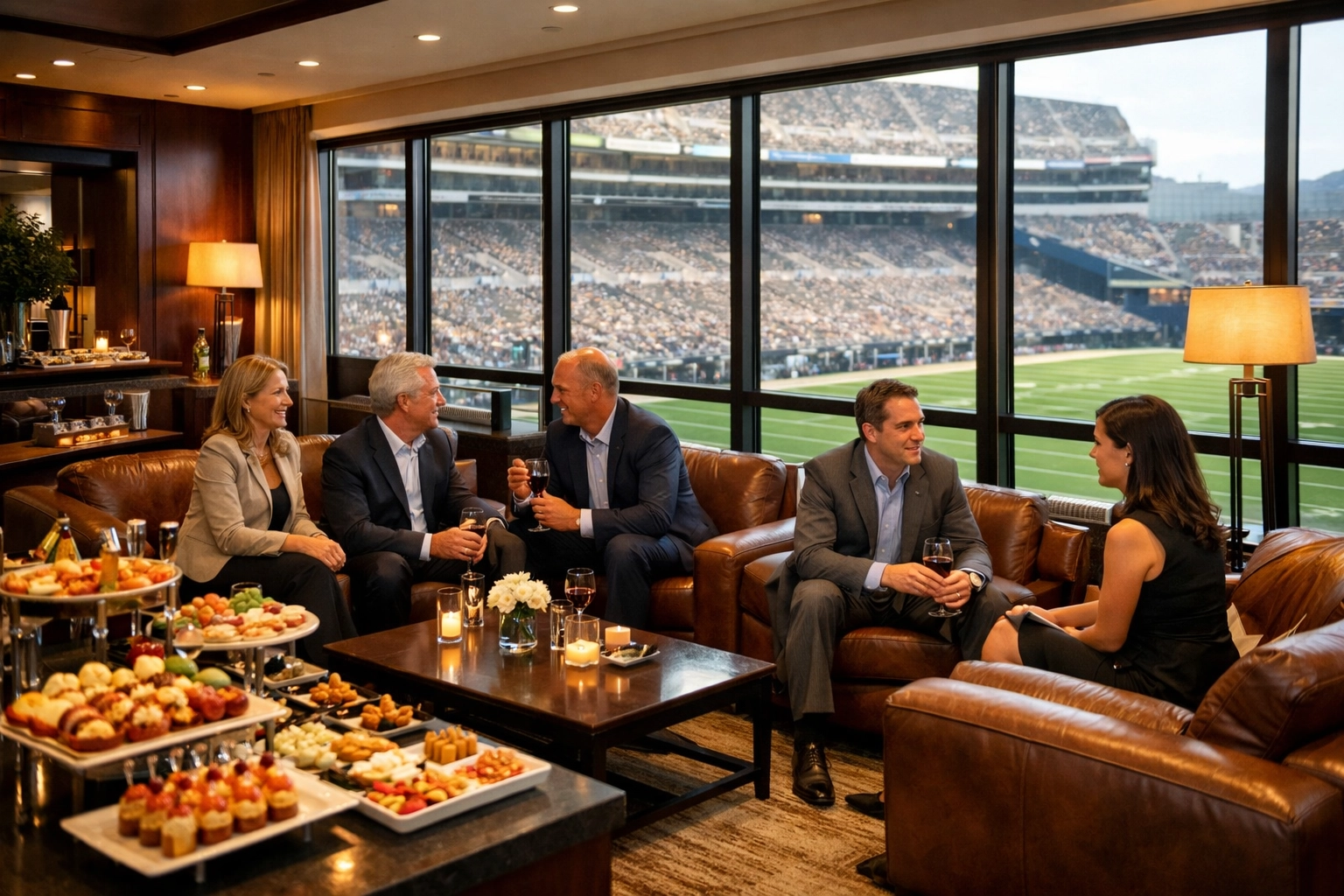
Your Super Bowl VIP hospitality investment encompasses multiple layers beyond the obvious ticket costs. Premium suite packages range from $15,000 to $50,000 per person depending on location and amenities. Transportation logistics: including private aviation, ground transportation, and security: add another $25,000 to $100,000 for executive teams.
Hospitality experiences, branded activations, and concierge services contribute additional costs. A comprehensive corporate package for 10-15 key clients or prospects typically ranges from $250,000 to $750,000 when you factor in all components properly.
Understanding these cost structures helps you calculate realistic return scenarios. The question isn't whether you can generate 10X ROI: it's whether you can structure your hospitality strategy to deliver measurable business value that justifies the investment.
The ROI Formula That Actually Matters
Traditional ROI calculations fall short when evaluating VIP hospitality effectiveness. You can't simply divide new revenue by hospitality costs and expect meaningful insights. The return on Super Bowl hosting manifests across multiple dimensions that demand more sophisticated measurement approaches.
Direct revenue attribution tracks deals closed within 12 months of the event with attendees. Relationship acceleration measures how hospitality experiences compress typical sales cycles from months to weeks. Brand elevation quantifies increases in brand perception and preference among target audiences. And strategic positioning evaluates access to decision-makers who previously remained unreachable.
The executives who consistently generate positive returns from Super Bowl hospitality understand this multi-dimensional calculation. They're not hoping for immediate contract signatures at halftime. They're architecting experiences that fundamentally shift business relationships and create compounding value over time.

Where the Real Returns Come From
Your actual returns from VIP hospitality rarely come from the game itself. The magic happens in the strategic conversations during exclusive dinners, the relationship depth developed during private transportation, and the trust built when you solve unexpected logistics challenges seamlessly.
One Fortune 500 CMO shared how a Super Bowl hospitality experience converted a resistant prospect into a $3.2 million annual client: not because of the game, but because the intimate setting allowed for honest conversations about business challenges that never surfaced in formal meetings. The suite provided the environment. The strategic hosting strategy delivered the outcome.
These transformational experiences share common elements. They prioritize quality over quantity in guest selection, ensuring every attendee represents significant business potential. They blend business and entertainment naturally rather than forcing awkward sales conversations. They demonstrate operational excellence through flawless logistics that showcase your company's attention to detail. And they create memorable moments that guests associate with your brand long after the confetti settles.
Calculating Your Realistic ROI Potential
Here's a framework for evaluating whether Super Bowl VIP hospitality makes financial sense for your organization. Start by identifying your average client lifetime value: this becomes your benchmark for measuring success. If your typical enterprise client generates $500,000 in lifetime revenue, converting one prospect through Super Bowl hospitality justifies significant investment.
Next, assess your sales cycle compression opportunity. If hospitality experiences accelerate deals by 60-90 days, calculate the time value of that acceleration. For high-value contracts, this alone can justify hospitality costs through improved cash flow and reduced sales expenses.
Consider your brand elevation multiplier. Premium hospitality positions your company as a market leader capable of delivering exceptional experiences. This perception shift affects every subsequent business interaction, creating compounding value that extends far beyond immediate attendees.

The Mistakes That Kill ROI Potential
Your hospitality investment generates minimal returns when strategic planning takes a back seat to logistics. The most common mistake? Treating Super Bowl hosting as a transactional perk rather than a strategic relationship accelerator.
Companies that fail to generate positive returns typically make these critical errors: inviting guests based on relationship comfort rather than business potential, over-crowding experiences that prevent meaningful conversations, failing to plan strategic touchpoints before and after the event, and neglecting follow-up that converts hospitality goodwill into concrete business outcomes.
The inverse approach transforms results. Select 8-12 high-value prospects or clients who represent significant revenue potential. Design intimate experiences that facilitate authentic relationship building. Create pre-event engagement that establishes business context. And implement systematic follow-up that moves relationships forward with clear next steps.
For additional insights on maximizing your Super Bowl hospitality investment, check out this comprehensive video resource: https://www.youtube.com/watch?v=l6J-0zileKE
Measuring Success Beyond the Spreadsheet
Your Super Bowl hospitality ROI extends into territories that traditional financial metrics struggle to capture. Access to C-suite decision-makers who declined previous meeting requests. Market intelligence gathered during informal conversations. Strategic partnerships seeded during chance encounters with industry leaders.
These intangible returns don't appear on quarterly reports, yet they shape your company's competitive position and growth trajectory. The executive who secures a private conversation with an industry influencer during Super Bowl weekend might unlock market opportunities worth millions: returns that trace back to hospitality investment but resist simple calculation.
Strategic Implementation for Maximum Returns
Your path to positive ROI starts with crystal-clear objectives before you book a single reservation. Define precisely what business outcomes would justify your investment: three new enterprise clients, partnership with a specific target company, or market positioning shift among key industry players.
Build your guest list backward from these objectives. Each invitation should map directly to a specific business goal. Then design your hospitality experience to facilitate those outcomes naturally. A prospect who needs to understand your company's innovation culture benefits from behind-the-scenes content creator experiences. A potential partner evaluating your operational capabilities sees your value through flawless logistics execution.

The most successful corporate hosts treat Super Bowl weekend as the centerpiece of a 90-day relationship acceleration campaign. Pre-event engagement establishes context and builds anticipation. The event itself delivers transformational experiences. Post-event follow-up converts momentum into concrete business outcomes.
The Verdict on 10X Returns
Can Super Bowl VIP hospitality generate 10X ROI? The honest answer: it depends entirely on your strategic approach, target guest selection, and ability to convert hospitality experiences into business outcomes. Companies that achieve exceptional returns don't stumble into them accidentally. They architect comprehensive strategies where hospitality serves as a relationship accelerator, not a standalone tactic.
Your realistic expectation should center on 3-5X returns when executed strategically: still remarkable by marketing investment standards. The rare cases achieving 10X returns typically involve landing transformational clients or partnerships that dramatically shift company trajectory.
The question isn't whether VIP hospitality can deliver exceptional returns. It's whether your organization has the strategic discipline and execution capabilities to realize that potential. With proper planning, clear objectives, and sophisticated follow-up, Super Bowl hospitality becomes a powerful tool for relationship acceleration and business development.
Ready to explore how strategic Super Bowl hospitality can advance your business objectives? Our team specializes in creating VIP experiences that deliver measurable business outcomes beyond the game day excitement. Contact us at +1 970-709-0037 or info@usaev.com to discuss how we can help you maximize the return on your corporate hospitality investment.