
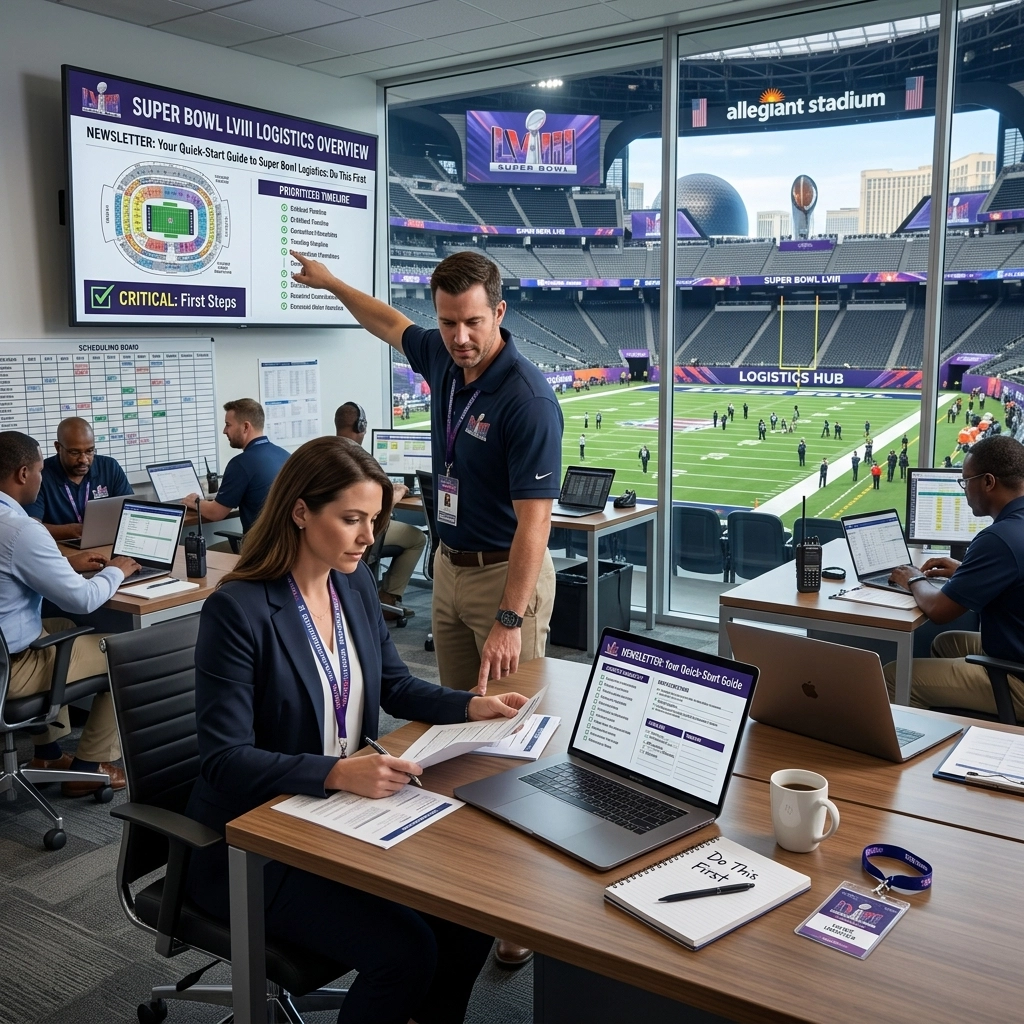
The Super Bowl is not just a three-hour football game; it is a massive, multi-city branding blitz that demands military-grade precision. If you are reading this, you likely understand that the difference between a successful corporate activation and a logistical nightmare lies in the months of preparation leading up to kickoff. At USA Entertainment Travel, we have seen it all, and we know that the initial impression your logistical plan makes is crucial to your overall ROI.
That is where most executives stumble. They focus on the tickets and the suites before they focus on how their guests will actually get to the stadium. If you want to dominate the high-stakes environment of the Super Bowl, you must start with the foundation. This newsletter is your essential roadmap to ensuring your brand presence remains flawless from the moment your executives land until the final whistle blows.
Master the 2.5–3 Hour Arrival Rule
The most common mistake made by even the most seasoned corporate travel planners is underestimating the density of Super Bowl Sunday. You cannot treat this like a standard Sunday Night Football game. The "Super Bowl Footprint" extends for miles around the stadium, creating a web of security checkpoints, road closures, and "no-fly" zones for rideshare vehicles.
Hook your readers and guests by setting expectations early: you must be on-site at least 2.5 to 3 hours before kickoff. This is not a suggestion; it is a logistical necessity. This window accounts for the travel distance from high-end hotels, the inevitable parking delays, and the rigorous security screening that every individual must pass through.
Early arrival does more than just avoid stress. It allows your VIPs to navigate the gates with ease, locate their premium seating or suites, and access hospitality lounges before the "gate surge" hits. When your executives arrive calm and composed, they are in the right mindset for high-stakes networking. For more detailed insights on managing this window, check out the proven Super Bowl logistics framework for a flawless branding blitz.

Secure Your High-End Transportation Early
Relying on standard rideshare apps during a Super Bowl blitz is a recipe for disaster. During peak arrival and departure windows, surge pricing can skyrocket by 300% to 400%, but the real issue is availability. A "confirmed" ride in an app can be canceled by a driver who finds a better fare, leaving your high-level executives stranded on a curb.
Secure a dedicated fleet or a professional transportation partner now. You need drivers who understand the specific regional logistics pathways: the "back ways" into the stadium that aren't blocked by the NFL’s security perimeter. Whether your team is moving between San Francisco, San Jose, or Oakland, or navigating future host cities, having a pre-vetted driver is your greatest asset.
Dive deep into your transportation strategy by watching our latest briefing on high-stakes travel management: https://www.youtube.com/watch?v=l6J-0zileKE
Audit Your Credential and Security Systems
Nothing kills a branding blitz faster than an executive standing at a gate they aren't allowed to enter. Super Bowl logistics involve a complex hierarchy of credentials. You must know exactly what doors your passes open. Are you holding general admission, premium access, sponsor/VIP badges, or specific media credentials?
Frontline security staff at the Super Bowl are trained to be rigid. They cannot "make an exception" for your CEO if they are at the wrong gate or lack the proper badge. Your first task this month is to verify every single ticket type and the corresponding entry point. Aligning your transportation drop-off points with your specific credential gates will save you miles of walking and hours of frustration.
If you are feeling overwhelmed by the complexity, you can learn how to create a bulletproof Super Bowl logistics plan in 5 minutes to get your team on the right track immediately.
The Three Pillars of Your Logistical Foundation
To succeed in this high-stakes marketing environment, you must view your logistics through three distinct pillars. Failure in any one of these areas will create a ripple effect that compromises your brand visibility.
- Event Logistics: This includes the movement of your staff and VIPs, the security of your physical assets, and the flow of your guests through the stadium gates.
- Food & Beverage Coordination: If you are hosting off-site events, your supply chain must be locked in. With 70,000+ people descending on a single area, local food supplies and delivery windows become extremely tight.
- Merchandise and Brand Assets: Your promotional displays, retail inventory, and branding materials must arrive on schedule. Stock-outs during the biggest game of the year are unacceptable.

By focusing on these pillars, you ensure that your brand presence is robust and reliable. High-impact branding is built on the silent success of these logistical details. For a deeper dive into this, read the logistics experts guide to high-impact branding at the Super Bowl.
Regional Movement vs. Stadium Movement
A major oversight in Super Bowl planning is focusing solely on the stadium. The Super Bowl "footprint" is actually a regional event. Your guests will be moving between airports, downtown hotels, transit hubs, and multiple entertainment venues across different cities.
You must plan for the "last mile" and the "first fifty miles" simultaneously. Arriving in the region with significant buffer time: often several days before the game: is the only way to ensure your team is positioned for success. Don't plan an airport-to-stadium sprint on game day. It simply won't work.
Your Immediate "Do This First" Checklist
To ensure you are ahead of the curve, execute these tasks immediately. This forward-looking approach will transform your stress into a strategic advantage.
- Confirm Your Personnel: Who is going? Every additional person adds a layer of logistical complexity. Lock your list now.
- Identify Credential Tiers: Don't just buy "tickets." Know exactly what access those tickets provide and where the corresponding entry points are located.
- Calculate the Buffer: Apply the 2.5–3 hour rule to every guest's itinerary.
- Audit Your Logistics Partner: Are they experienced in Super Bowl-level events? If not, it is time to upgrade.

Why High-Stakes Travel Management Matters
At the end of the day, the Super Bowl is about ROI. You are there to network, to close deals, and to elevate your brand. If your executives are worried about where their car is or why they can't get into a specific lounge, they aren't focused on the business at hand. Professional logistics management removes the friction from the experience, allowing your team to perform at their highest level.
Maintain a confident, definitive strategy. When you master the logistics, you master the event. You can see more about our strategic approach here: https://www.youtube.com/watch?v=l6J-0zileKE
For those deciding between different hosting options, it is worth exploring whether VIP suites vs. private off-site hosting is the better fit for your specific branding goals. Both require distinct logistical approaches that must be integrated into your master plan.
The Super Bowl waits for no one. The foundational work you do today determines the victory you celebrate in February. Let’s get to work.
USA Entertainment Travel
Corporate Travel Management Specialists
Phone: +1 970-709-0037
Email: info@usaev.com