

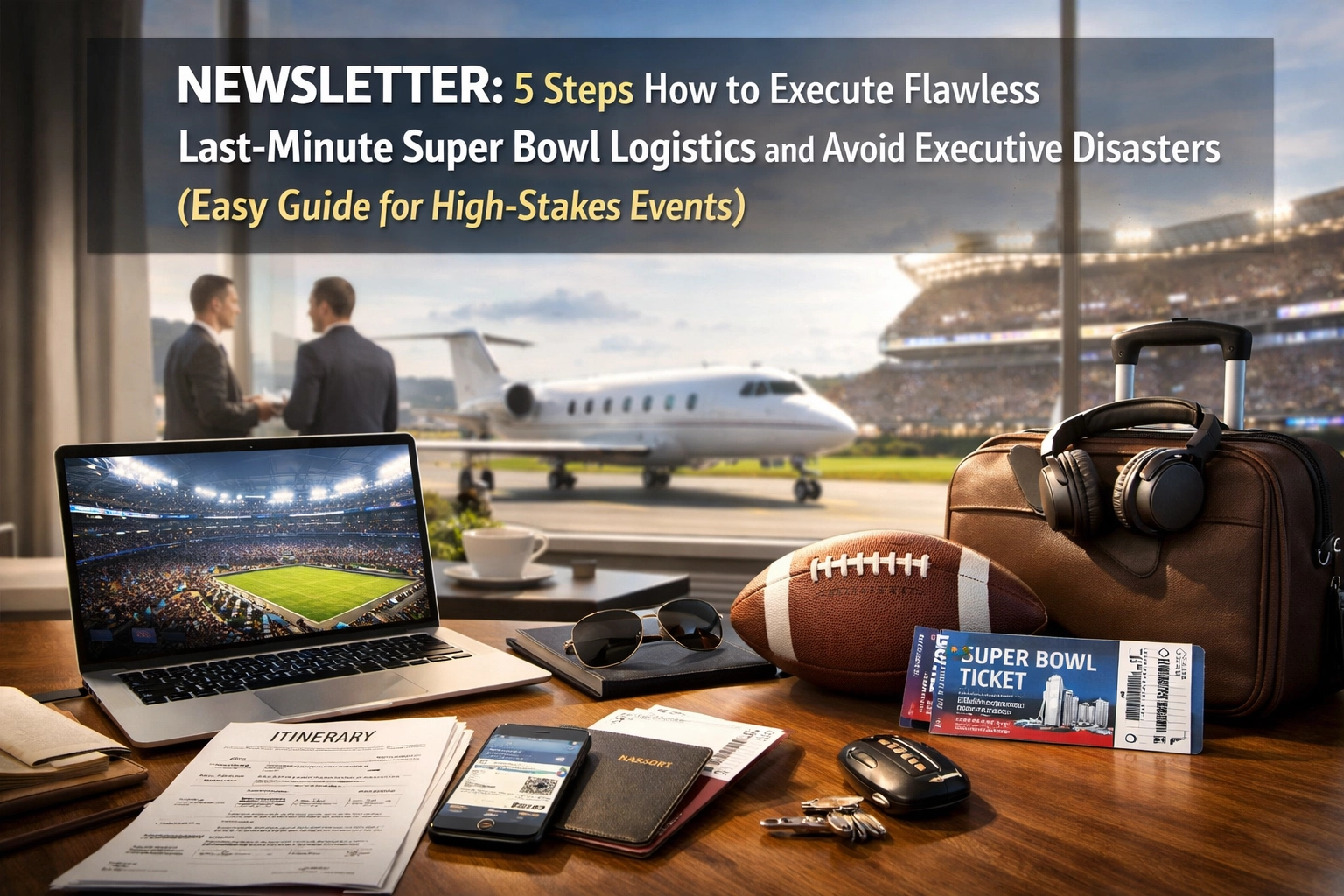
Your phone rings at 5 PM on a Thursday. Your CEO just decided he's attending the Super Bowl with three key clients. You have 72 hours to orchestrate flawless transportation, accommodations, security, and entertainment for executives who expect nothing less than perfection. The stakes? A potential eight-figure contract and your reputation.
Last-minute Super Bowl logistics don't have to become your worst nightmare. While most corporate travel managers panic when faced with sudden high-stakes event requests, you can execute a seamless experience that impresses your executives and their VIP guests. The difference between travel disaster and logistical triumph comes down to following a proven system that addresses every critical touchpoint.
Step 1: Establish Your Priority Hierarchy and Communication Protocol Immediately
The moment you receive that last-minute Super Bowl request, your first instinct might be to start calling hotels and charter services. Stop. Your initial 30 minutes determine whether you'll spend the next three days putting out fires or executing a coordinated strategy.
Create a single-source communication hub where all stakeholders can access real-time updates. Whether you use a shared document, project management tool, or dedicated group chat, establish this immediately. Document every executive's specific requirements: dietary restrictions, mobility needs, preferred room temperature, security clearance levels, and networking objectives.
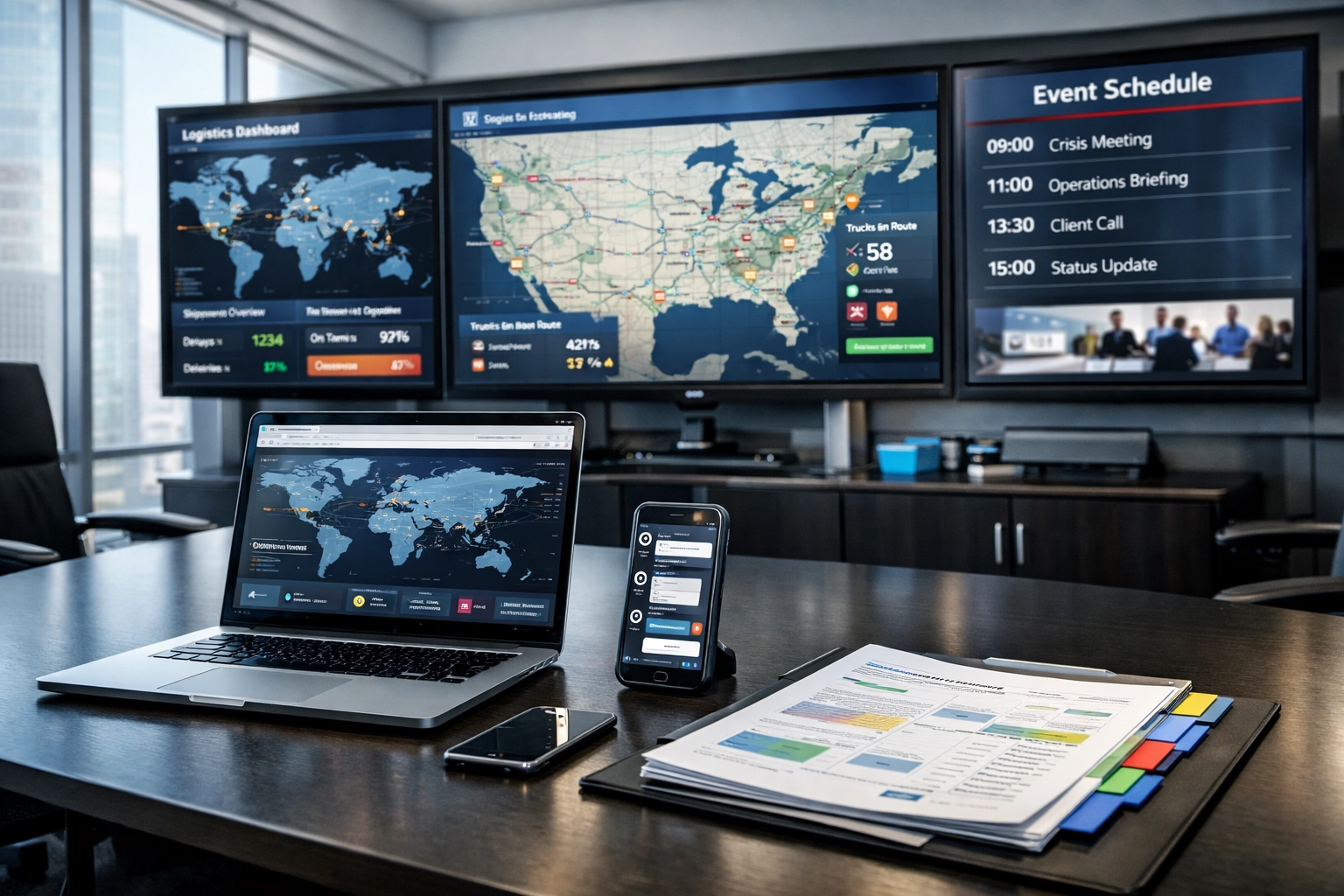
Rank your logistics in order of time sensitivity and inflexibility. Ground transportation and accommodations near the venue have the tightest windows: these become your priority targets. Restaurant reservations and entertainment options offer more flexibility for last-minute adjustments. This hierarchy prevents you from wasting precious hours on items you can solve later while critical bookings slip away.
Assign a single point of contact for each executive in your group. This person fields all questions, preferences, and changes for their assigned VIP, preventing the chaos of multiple people requesting conflicting arrangements. You maintain control of the master plan while ensuring every executive feels personally attended to.
Step 2: Leverage Specialized Networks to Secure Impossible Bookings
Standard booking channels fail you during Super Bowl week. Hotels show "no availability" online while corporate travel specialists access inventory you'll never see on consumer websites. Transportation companies claim they're fully booked, yet they're holding vehicles for their premium partners.
Your competitive advantage lies in relationships with providers who specialize in high-stakes event logistics. These partners maintain reserved inventory specifically for last-minute executive needs because they understand the corporate decision-making timeline. They've coordinated with venue security, understand access protocols, and have contingency plans already in place.
Contact providers who demonstrate immediate availability verification. When you call, they should confirm room blocks or vehicle availability within minutes, not "get back to you." At this stage, you need partners who hold inventory, not brokers who need to source it. Watch our detailed walkthrough on managing Super Bowl executive logistics to see how specialized networks operate differently than standard booking channels.
Test your ground transportation setup before your executives arrive. Your driver should conduct a dry run of the route from airport to hotel to venue, identifying potential traffic bottlenecks, security checkpoints, and alternative routes. They should have direct communication with venue security to navigate VIP entrance protocols smoothly.
Step 3: Build Redundancy Into Every Critical System
Your primary limousine service confirms they'll be waiting at the airport. Excellent. Now book a backup service on standby. Your executive suite reservations are confirmed at the hotel closest to the stadium. Perfect. Now secure backup accommodations at a secondary property.

This redundancy isn't pessimism: it's professional responsibility when managing high-stakes executive travel. Weather delays flights. Security situations close access routes. Hotel systems crash during peak check-in periods. The executives you're serving don't want to hear about problems; they expect solutions already in place.
Create a physical "go bag" with printed confirmations, alternative contact numbers, venue maps, and backup credit cards. When your phone battery dies at the worst possible moment or you lose cellular service in a crowded stadium area, this analog backup keeps you operational. Include a portable battery charger, but don't rely on it exclusively.
Schedule vehicle arrivals 30 minutes earlier than absolutely necessary. Build buffer time into every transition. Your executives will appreciate arriving relaxed rather than rushing, and when inevitable delays occur, you've absorbed them without creating visible problems. This buffer time is your invisible safety net that makes you look like a logistical genius.
Document every backup plan in your communication hub so your entire team knows the contingency procedures. If you become unreachable, someone else can immediately execute Plan B without wasting time figuring out what you would have done.
Step 4: Orchestrate Comfort Details That Executives Notice
Temperature control matters more than most travel managers realize. Stadium environments fluctuate wildly between outdoor cold and packed-suite heat. Ensure your transportation and accommodations maintain consistent, comfortable temperatures. Brief your drivers to set vehicles to 68-72°F before pickup: executives shouldn't need to request adjustments.
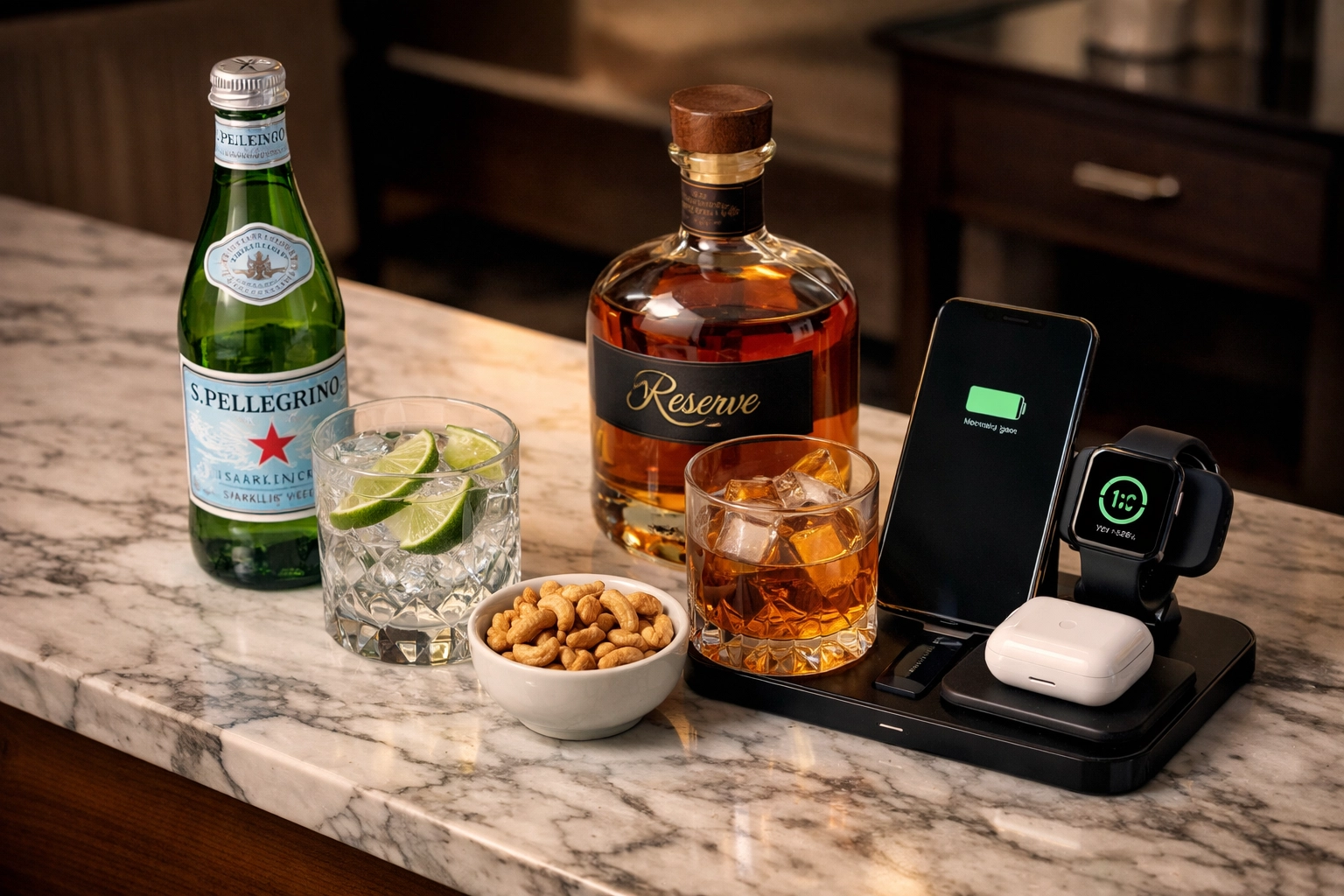
Stock executive suites with specific refreshments before arrival. Not generic minibar items: personalized selections based on your documented preferences from Step 1. Your CEO prefers sparkling water with lime and cashews? Have them waiting. Your client prefers a specific bourbon? It's already on the bar cart. These details demonstrate the thoroughness that distinguishes premium service from adequate service.
Coordinate meal timing around the event schedule strategically. Serve substantial food 90 minutes before kickoff so executives aren't hungry during critical networking windows but aren't uncomfortably full either. Arrange for lighter refreshments during halftime when conversation naturally increases. Time beverage service to maintain energy without overconsumption that impacts professional interactions.
Test all technology before your executives arrive. Verify WiFi connectivity, charging stations, and presentation equipment in your suite. Your clients shouldn't discover that the "state-of-the-art suite" lacks sufficient outlets to charge four phones simultaneously. Bring a multi-port charging station in your go bag just in case.
Step 5: Create a Minute-by-Minute Timeline with Flexibility Built In
Your detailed timeline should account for every movement from airport arrival through post-game departure. But here's the critical distinction: share a simplified version with your executives while you maintain the detailed operational version behind the scenes.
Executives want to know "Car picks you up at 4:00 PM, arrival at suite by 5:30 PM, kickoff at 6:30 PM." They don't need to know about your driver's alternate route plan, your advance security coordination, or your backup transportation standing by two blocks away. You're managing complexity to deliver simplicity.
Build explicit decision points into your timeline where executives can modify plans without creating chaos. "We have dinner reservations at 9:30 PM, but if you prefer to extend networking time in the suite, I can push that to 10:30 PM with a single call." This controlled flexibility makes executives feel empowered while you maintain operational control.
Assign a dedicated point person to remain at the hotel handling any issues that arise while you're on-site at the venue. This person can coordinate room service, address accommodation concerns, and handle the inevitable last-minute request that would otherwise pull you away from critical on-site duties.
Execute with Confidence: Your Last-Minute Success Blueprint
Last-minute Super Bowl logistics separate amateur travel coordinators from professional executive travel managers. You've now got the five-step framework that transforms potential disasters into seamless experiences that enhance your company's reputation and create networking environments where deals happen naturally.
The executives you're serving this weekend will remember how you made them feel: confident, valued, and free to focus on their business objectives instead of logistical concerns. That's the difference between being a travel booker and being a strategic partner in your company's success.
When you're ready to hand off these high-stakes logistics to specialists who execute this system for Fortune 500 companies every Super Bowl season, we're here. USA Entertainment Travel brings the specialized networks, redundant systems, and minute-by-minute coordination that turns last-minute requests into flawlessly executed experiences.
You can explore more strategies in our corporate travel management insights or discover how other executives are maximizing their Super Bowl ROI.
Your next Super Bowl logistics challenge doesn't have to keep you up at night. With the right system, the right partners, and the right mindset, you'll execute flawlessly while your competitors scramble.
Ready to eliminate the stress of last-minute executive travel logistics? Contact USA Entertainment Travel today at +1 970-709-0037 or email us at info@usaev.com. Let's discuss how we transform your high-stakes events into seamless experiences that drive business results.