
Your corporate travel booking process is about to undergo the most significant transformation since online reservation systems emerged two decades ago. AI-powered travel management platforms are revolutionizing how businesses handle everything from initial trip planning to real-time disruption management, and that's where smart companies gain competitive advantages while reducing operational overhead.
The shift from manual booking processes to intelligent automation represents more than technological advancement: it's a fundamental reimagining of corporate travel efficiency. Your travel managers, executives, and frequent business travelers are already experiencing the early benefits of this transformation, with companies reporting 30% cost reductions and 25% productivity increases within their first year of AI implementation.
Intelligent Automation Eliminates Manual Booking Inefficiencies
Your current booking process likely involves multiple platforms, endless price comparisons, and time-consuming administrative tasks that pull employees away from revenue-generating activities. AI-powered travel management systems eliminate these inefficiencies by automating complex decision-making processes that previously required hours of manual work.

Machine learning algorithms analyze your company's travel patterns, policy requirements, and budget constraints to automatically generate optimized itineraries. Instead of your employees spending valuable time researching flight options across multiple carriers, AI systems instantly compare thousands of combinations while ensuring compliance with your corporate travel policies.
Virtual travel assistants leverage natural language processing to understand traveler preferences and historical booking data, providing personalized recommendations that balance individual comfort with cost optimization. Your team members can simply describe their travel needs in plain language, and the AI system handles everything from initial search to final confirmation.
The automation extends beyond basic bookings to encompass expense reporting, receipt management, and policy compliance monitoring. Your finance team benefits from real-time expense tracking that eliminates manual report submissions, while automated policy enforcement prevents unauthorized bookings before they occur.
Predictive Analytics Drive Strategic Cost Management
Your travel budget optimization becomes significantly more sophisticated when AI analyzes historical booking patterns, seasonal pricing trends, and market fluctuations to identify cost-saving opportunities. Predictive analytics examine millions of data points to determine optimal booking windows, route selections, and accommodation choices that minimize expenses without compromising travel quality.
Real-time price monitoring continuously tracks fare changes across multiple suppliers, automatically rebooking travelers when better rates become available. Your company benefits from dynamic pricing strategies that adapt to market conditions, ensuring you never miss cost-saving opportunities due to manual oversight limitations.
AI-driven fraud detection systems protect your corporate accounts by identifying unusual spending patterns, duplicate bookings, and potentially fraudulent transactions. These security measures reduce financial risk while maintaining seamless travel experiences for authorized users.
Enhanced Compliance and Risk Management Capabilities
Your corporate travel compliance requirements become more manageable when AI systems automatically enforce policy guidelines during the booking process. Instead of relying on post-travel audits to identify policy violations, intelligent platforms prevent non-compliant bookings from occurring in the first place.

Advanced risk management features continuously monitor global security conditions, health advisories, and travel restrictions that might affect your business travelers. AI systems automatically alert travelers and administrators about potential risks, suggest alternative routes, and implement contingency plans when necessary.
The technology provides comprehensive audit trails for every booking decision, expense submission, and policy exception, ensuring your organization maintains regulatory compliance while supporting internal governance requirements. Your legal and compliance teams benefit from detailed reporting capabilities that demonstrate adherence to corporate travel policies and industry regulations.
Personalized Experiences Within Corporate Constraints
Your employees no longer need to choose between personal preferences and corporate policy compliance. AI-powered platforms analyze individual travel histories, accommodation preferences, and scheduling patterns to recommend options that satisfy both personal comfort and company requirements.
The personalization extends to loyalty program optimization, where AI systems automatically select bookings that maximize your company's rewards accumulation across preferred suppliers. Your frequent travelers benefit from consistent service levels while your organization captures maximum value from corporate travel partnerships.
Smart routing algorithms consider individual traveler preferences for departure times, connection preferences, and seat selections while maintaining budget constraints. The result is higher employee satisfaction with business travel experiences, leading to improved productivity and reduced travel-related stress.
Real-Time Disruption Management and Support
Your business travel operations become more resilient when AI systems provide 24/7 monitoring and automatic response capabilities for travel disruptions. Machine learning algorithms predict potential delays, cancellations, and route changes before they impact your travelers, enabling proactive rebooking and alternative arrangements.

Intelligent chatbots handle routine traveler inquiries instantly, reducing response times from hours to seconds while freeing your travel management team to focus on complex issues requiring human intervention. The AI-powered support operates continuously across time zones, ensuring your global workforce receives consistent assistance regardless of location or travel timing.
Emergency response capabilities automatically identify travelers in affected regions during natural disasters, political events, or health emergencies. Your duty of care obligations become easier to fulfill when AI systems provide real-time traveler location data and automated communication protocols for crisis situations.
Advanced Analytics Transform Travel Program Management
Your travel program gains strategic value when AI analytics provide detailed insights into spending patterns, supplier performance, and traveler behavior trends. Dashboard reporting transforms raw booking data into actionable intelligence that supports better vendor negotiations, policy refinements, and budget forecasting.
Predictive modeling helps your organization anticipate future travel demands, seasonal variations, and market changes that affect corporate travel costs. This foresight enables proactive budget planning and strategic decision-making that traditional reactive management approaches cannot provide.
Competitive benchmarking features compare your travel program performance against industry standards, identifying opportunities for improvement and cost optimization. Your leadership team receives comprehensive reporting that demonstrates travel program ROI and supports strategic business planning.
Integration Capabilities Streamline Corporate Systems
Your existing enterprise systems integrate seamlessly with AI-powered travel platforms through API connections that synchronize data across HR, finance, and project management applications. Employee profiles, approval workflows, and expense reporting processes become unified, eliminating data silos that create administrative inefficiencies.
Calendar integration automatically suggests optimal travel timing based on meeting schedules, project deadlines, and availability patterns. Your employees benefit from intelligent scheduling that minimizes productivity disruptions while maximizing travel efficiency.
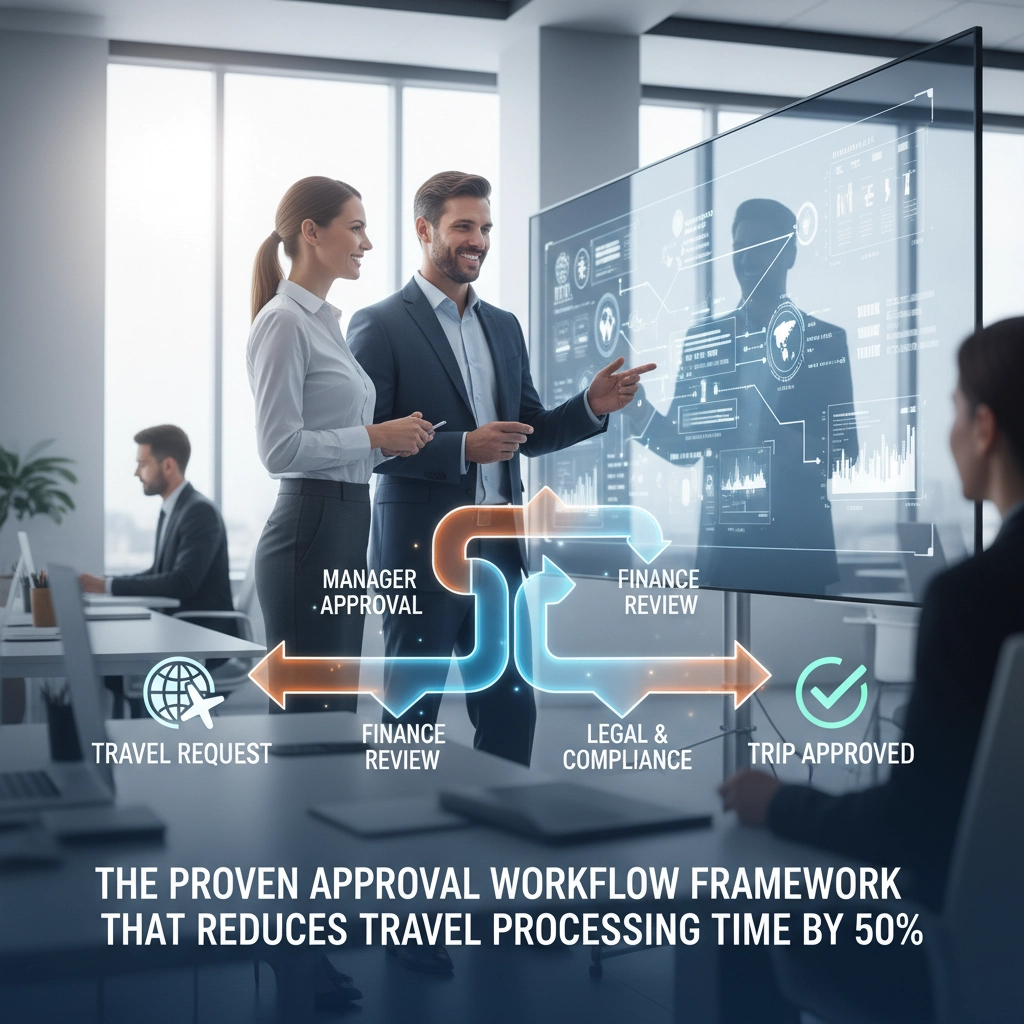
The platform adapts to your organization's unique approval hierarchies, budget authorization levels, and exception handling procedures. Custom workflows ensure that your established corporate governance processes remain intact while benefiting from AI-powered optimization.
Future-Proofing Your Corporate Travel Strategy
Your investment in AI-powered travel management positions your organization at the forefront of business travel innovation. As machine learning algorithms continue evolving, your platform capabilities improve automatically without requiring system replacements or major infrastructure changes.
The technology's continuous learning capabilities mean your travel program becomes more efficient over time, adapting to changing business requirements, market conditions, and traveler preferences. Your competitive advantage grows as the AI system accumulates organizational knowledge and refines optimization strategies.
Smart companies recognize that AI-powered travel management represents more than cost savings: it's a strategic capability that enhances employee productivity, improves risk management, and supports business growth objectives through more efficient operations.
Ready to transform your corporate travel management with AI-powered solutions? Contact USA Entertainment Travel today to discover how our intelligent platform can optimize your travel program while reducing costs and improving traveler satisfaction.
Contact USA Entertainment Travel:
Phone: +1 970-709-0037
Email: info@usaev.com
Press Release
USA Entertainment Travel Launches Advanced AI-Powered Corporate Travel Management Platform
Denver, CO – November 28, 2025 – USA Entertainment Travel, a leading corporate travel management company, today announced the launch of its revolutionary AI-powered travel management platform designed to transform how businesses handle corporate travel booking, expense management, and risk assessment.
The new platform leverages machine learning algorithms and predictive analytics to automate complex travel decisions while maintaining strict compliance with corporate policies and budget constraints. Early beta testing with select enterprise clients has demonstrated average cost reductions of 30% and productivity improvements of 25% within the first year of implementation.
"Corporate travel management has remained largely unchanged for decades, requiring manual processes that consume valuable employee time and often result in suboptimal booking decisions," said Dan Kost, CEO of USA Entertainment Travel. "Our AI-powered platform eliminates these inefficiencies while providing unprecedented visibility into travel spending patterns and risk management capabilities."
Key Platform Features Include:
Intelligent Automation: Machine learning algorithms analyze company travel patterns, policy requirements, and budget constraints to generate optimized itineraries automatically, reducing booking time from hours to minutes.
Predictive Cost Management: Real-time price monitoring and predictive analytics identify cost-saving opportunities across flights, accommodations, and ground transportation while ensuring policy compliance.
Enhanced Security and Compliance: Advanced fraud detection systems and automated policy enforcement protect corporate accounts while maintaining comprehensive audit trails for regulatory compliance.
24/7 Disruption Management: AI-powered monitoring provides real-time alerts for travel disruptions, automatically rebooking travelers and implementing contingency plans when delays or cancellations occur.
Personalized Experience: The platform balances individual traveler preferences with corporate requirements, optimizing loyalty program benefits while maintaining budget discipline.
The platform integrates seamlessly with existing enterprise systems including HR, finance, and project management applications through robust API connections. Custom approval workflows and authorization hierarchies ensure organizations maintain established governance processes while benefiting from AI optimization.
"We're seeing increasing demand from enterprise clients for travel management solutions that provide both cost control and employee satisfaction," added Kost. "Our AI platform delivers on both objectives while reducing the administrative burden on corporate travel managers."
The platform includes comprehensive analytics and reporting capabilities that provide strategic insights into spending patterns, supplier performance, and traveler behavior trends. Dashboard reporting transforms booking data into actionable intelligence supporting vendor negotiations, policy refinements, and budget forecasting.
USA Entertainment Travel's AI-powered platform is now available to enterprise clients across North America, with international expansion planned for Q2 2026. The company provides full implementation support, training, and ongoing optimization services to ensure maximum return on investment for corporate travel programs.
For more information about USA Entertainment Travel's AI-powered corporate travel management platform, contact:
USA Entertainment Travel
Phone: +1 970-709-0037
Email: info@usaev.com
Website: https://travel.usaev.com
Newsletter
Corporate Travel Intelligence: December 2025 Edition
Industry Trends Reshaping Business Travel
The corporate travel landscape continues evolving rapidly as AI-powered platforms demonstrate measurable impact on cost management and operational efficiency. Recent industry analysis reveals that companies implementing intelligent travel management systems are achieving 30% cost reductions while improving traveler satisfaction scores by 40%.
Predictive Analytics Leading Cost Optimization
Advanced algorithms now analyze historical booking patterns and market fluctuations to identify optimal booking windows, route selections, and accommodation choices. Organizations leveraging these capabilities report significant budget improvements without compromising travel quality or employee preferences.
Enhanced Security Protocols
Corporate travel security has become increasingly sophisticated with AI-driven risk assessment tools that monitor global conditions, health advisories, and political developments. Real-time alerts and automated contingency planning ensure duty of care obligations while maintaining operational continuity.
Compliance and Risk Management Updates
Automated Policy Enforcement
Leading organizations are moving beyond reactive compliance audits to proactive policy enforcement during the booking process. AI systems prevent non-compliant bookings while maintaining comprehensive audit trails for regulatory requirements.
Fraud Detection Improvements
Advanced machine learning algorithms identify unusual spending patterns and potentially fraudulent transactions before they impact corporate accounts. These security measures protect financial assets while maintaining seamless travel experiences for authorized users.
Technology Integration Spotlight
Seamless Enterprise System Connectivity
Modern travel platforms integrate directly with HR, finance, and project management applications through robust API connections. This integration eliminates data silos while supporting custom approval workflows and authorization hierarchies.
Mobile-First User Experience
Travel management platforms now prioritize mobile accessibility, enabling employees to manage bookings, submit expenses, and receive real-time updates from any device. This flexibility supports today's remote and hybrid work environments.
Best Practices for Travel Program Optimization
Data-Driven Decision Making
Organizations achieving the greatest travel program success utilize comprehensive analytics to understand spending patterns, supplier performance, and traveler behavior trends. Regular performance reviews support strategic planning and vendor negotiations.
Employee-Centric Policy Development
Successful travel policies balance cost control with employee satisfaction by incorporating traveler feedback and preferences into policy design. This approach reduces exception requests while improving program compliance.
Continuous Platform Optimization
Companies maximizing travel technology investments implement regular system reviews, user training updates, and feature optimization based on evolving business requirements and market conditions.
Upcoming Industry Events
Corporate Travel Management Conference 2026
January 15-17, 2026 | Las Vegas, NV
Focus: AI integration strategies and ROI measurement
Business Travel Risk Assessment Summit
February 22-24, 2026 | Denver, CO
Topics: Global security monitoring and crisis response protocols
December Travel Insights
Seasonal Booking Patterns:
Q1 2026 business travel demand is projected to increase 15% compared to Q1 2025, driven by expanding international business development and delayed project implementations from previous quarters.
Cost Management Opportunities:
Early booking advantages for Q2 2026 travel are currently available, with potential savings of 20-25% on international flights and 15% on premium accommodations for bookings completed before January 31, 2026.
Ready to optimize your corporate travel program with AI-powered solutions? Our team provides comprehensive platform demonstrations, implementation support, and ongoing optimization services tailored to your organization's specific requirements.
Contact USA Entertainment Travel:
Phone: +1 970-709-0037
Email: info@usaev.com
The Hidden Costs of Manual Travel Booking (And How to Eliminate Them)
Your corporate travel expenses extend far beyond visible line items like flights, hotels, and ground transportation. Hidden costs embedded within manual booking processes are silently draining your budget through administrative overhead, booking inefficiencies, and missed optimization opportunities that AI-powered solutions can eliminate completely.
The true financial impact of manual travel management often surprises executives when comprehensive audits reveal the full scope of indirect costs. Your organization likely experiences these hidden expenses daily without recognizing their cumulative effect on operational efficiency and bottom-line performance.
Administrative Time Costs Compound Rapidly
Your employees spend an average of 3-4 hours researching, comparing, and booking a single business trip through traditional manual processes. When you multiply this time investment across your organization's annual travel volume, the opportunity cost becomes staggering: particularly when these hours could generate revenue or support strategic initiatives instead.
Travel managers dedicating 40-60% of their time to routine booking administration cannot focus on strategic supplier negotiations, policy optimization, or cost analysis that delivers greater organizational value. Your human resources become trapped in low-value activities that intelligent automation handles more efficiently and accurately.
The administrative burden extends beyond initial booking to encompass itinerary changes, cancellations, and rebooking requirements. Each modification typically requires 1-2 additional hours of manual work, creating cascading time costs that multiply when travel disruptions affect multiple employees simultaneously.
Policy Compliance Failures Generate Unnecessary Expenses
Your corporate travel policy exists to control costs and ensure appropriate spending, but manual enforcement creates gaps that result in policy violations and budget overruns. Employees booking through multiple platforms without automated policy checks frequently exceed authorized spending limits or select non-preferred suppliers that cost your organization money.

Post-travel audits can identify policy violations, but retroactive enforcement cannot recover the additional expenses already incurred. Your finance team spends valuable time investigating exceptions and processing reimbursements for bookings that automated systems would have prevented from occurring.
Inconsistent policy interpretation across different booking channels creates confusion that leads to inadvertent violations. Your employees make well-intentioned decisions that nevertheless result in higher costs due to unclear guidance or platform-specific booking processes that don't align with corporate requirements.
Missed Optimization Opportunities Increase Costs
Your manual booking processes cannot analyze the vast amount of data required to identify optimal pricing, routing, and timing opportunities. Human reviewers lack the capacity to evaluate thousands of combination possibilities across multiple suppliers while considering seasonal trends, advance purchase requirements, and loyalty program benefits.
Dynamic pricing in travel markets changes continuously throughout the day, creating opportunities for cost savings that manual processes cannot capture consistently. Your bookings likely occur at suboptimal times due to administrative scheduling rather than market-driven timing that maximizes value.
Loyalty program optimization requires sophisticated analysis of accrual rates, redemption values, and elite status benefits across multiple suppliers. Manual coordination of these variables rarely achieves maximum program value, resulting in lost rewards and status benefits that could reduce future travel costs.
Supplier Relationship Management Inefficiencies
Your vendor negotiations become less effective when manual booking data provides incomplete visibility into actual spending patterns, supplier performance, and booking volumes. Negotiating from incomplete information weakens your position and reduces potential savings opportunities.
Manual expense reporting delays provide poor visibility into current spending trends, making it difficult to identify emerging cost issues or adjust strategies proactively. Your financial planning suffers from lag time between actual expenses and reporting availability.
Preferred supplier compliance becomes difficult to monitor and enforce through manual processes, reducing the volume discounts and negotiated benefits your organization worked to secure. Lower compliance rates diminish your negotiating power in future contract discussions.
Risk Management Gaps Create Exposure
Your duty of care obligations become more challenging to fulfill when manual systems provide limited visibility into traveler locations, itinerary changes, and emergency contact information. Inadequate risk monitoring can result in compliance failures and potential liability exposure during crisis situations.

Manual processes struggle to maintain current information about global security conditions, health advisories, and travel restrictions that affect business travelers. Your risk assessment capabilities suffer from information gaps that automated monitoring systems eliminate through continuous data updates.
Emergency response coordination becomes more complex and time-intensive when traveler information exists across multiple systems without centralized access. Your crisis management effectiveness depends on rapid information access that manual processes cannot provide consistently.
Technology Integration Costs and Complications
Your existing enterprise systems require data synchronization that manual processes cannot maintain efficiently. Disconnected booking platforms create data silos that necessitate duplicate data entry and increase the likelihood of errors across HR, finance, and project management systems.
Multiple platform subscriptions and maintenance costs accumulate when your organization uses various booking tools without integration capabilities. Your technology expenses increase while operational efficiency decreases due to platform fragmentation.
Training requirements multiply when employees must learn different interfaces and processes for various booking platforms. Your onboarding time and ongoing education costs increase while user competency remains inconsistent across different tools.
Expense Reporting and Reconciliation Overhead
Your finance team dedicates significant resources to processing manual expense reports, verifying receipts, and reconciling travel bookings with actual charges. This administrative burden consumes valuable accounting resources that could focus on strategic financial analysis instead.
Manual expense categorization and coding introduces errors that require correction time and complicate financial reporting accuracy. Your accounting processes become more complex and time-intensive when dealing with inconsistent data formats and incomplete information.
Audit preparation requires substantial manual effort to compile travel documentation, demonstrate policy compliance, and provide supporting evidence for expense decisions. Your compliance costs increase while audit efficiency decreases due to manual document management requirements.
Strategic Planning Limitations
Your travel program optimization suffers from incomplete data analysis when manual reporting provides limited insights into spending patterns, traveler preferences, and supplier performance trends. Strategic decisions based on incomplete information reduce program effectiveness and cost optimization potential.
Budget forecasting becomes less accurate when historical data exists in fragmented formats across multiple systems. Your financial planning capabilities improve significantly when comprehensive data analysis supports evidence-based projections and strategic resource allocation.
Competitive benchmarking requires data standardization and analysis capabilities that manual processes cannot provide consistently. Your ability to evaluate program performance against industry standards depends on comprehensive data availability and analytical tools.
The cumulative impact of these hidden costs often exceeds the visible travel expenses by 20-30%, making manual booking processes significantly more expensive than they appear on traditional budget reports. Smart organizations recognize that investing in AI-powered travel management platforms eliminates these hidden costs while improving operational efficiency and strategic capabilities.
Ready to uncover the true cost of your manual travel booking processes? Contact USA Entertainment Travel for a comprehensive analysis of your current program and discover how AI-powered solutions can eliminate hidden expenses while improving traveler satisfaction.
Contact USA Entertainment Travel:
Phone: +1 970-709-0037
Email: info@usaev.com
5 Corporate Travel Security Threats Every Executive Should Know About
Your business travelers face evolving security challenges that extend far beyond traditional safety concerns, with cybersecurity vulnerabilities, data breaches, and sophisticated fraud schemes targeting corporate accounts and sensitive information. Understanding these modern threats enables your organization to implement protective measures that safeguard both travelers and company assets while maintaining operational efficiency.
Executive awareness of travel security threats becomes critical as remote work arrangements, international business expansion, and digital payment systems create new attack vectors that malicious actors exploit. Your security strategy must address both physical and digital risks that can compromise business operations and corporate reputation.
Corporate Account Fraud and Payment System Vulnerabilities
Your company credit cards and payment systems become attractive targets for sophisticated fraud schemes that exploit gaps in manual approval processes and inadequate transaction monitoring. Fraudulent bookings using corporate credentials often go undetected until monthly statement reviews, creating windows of opportunity for substantial financial losses.
Travel booking platforms without robust authentication measures allow unauthorized access to corporate accounts, enabling fraudsters to make bookings, cancel existing reservations, and redirect travel confirmations to external email addresses. Your organization faces both direct financial losses and operational disruptions when legitimate travelers discover their bookings have been compromised.

Advanced social engineering attacks target travel managers and administrative staff through phone calls and emails that appear legitimate but seek to obtain account credentials or authorize fraudulent transactions. These sophisticated schemes often succeed because they exploit normal business processes and time pressures that prevent thorough verification.
Automated fraud detection systems identify suspicious patterns in booking behavior, transaction timing, and destination selections that indicate potential unauthorized activity. Your protection improves significantly when AI-powered monitoring provides real-time alerts for unusual account activity rather than relying on manual review processes.
Data Theft and Information Security Breaches
Your travelers carry sensitive corporate information on mobile devices, laptops, and documents that become vulnerable to theft, loss, or unauthorized access during business trips. International travel increases exposure to state-sponsored cybersecurity threats and industrial espionage attempts that target valuable intellectual property and competitive intelligence.
Public Wi-Fi networks in airports, hotels, and conference centers present significant security risks when employees access corporate systems, email accounts, or confidential documents without proper encryption protection. Malicious actors monitor these networks to intercept login credentials, financial information, and proprietary business data.
Travel itinerary information shared through unsecured channels provides criminals with detailed intelligence about executive movements, meeting schedules, and facility access that can support targeted attacks on both travelers and corporate facilities. Your information sharing practices must balance operational requirements with security considerations.
Corporate travel booking platforms store vast amounts of personal and financial data that become attractive targets for cybercriminals seeking to monetize stolen information. Data breaches affecting travel suppliers can expose your employee personal information, payment details, and travel patterns to unauthorized parties.
Identity Theft and Credential Compromise
Your employees' personal information becomes vulnerable during travel registration, hotel check-ins, and rental car processes that require identity document sharing with multiple service providers. Identity theft schemes specifically target business travelers because their credentials often provide access to corporate systems and financial accounts.
Passport and identification document theft creates both immediate travel disruptions and long-term identity compromise risks that can affect corporate security clearances and business operations. Your emergency response procedures must address both the immediate travel assistance needs and the broader security implications of identity document theft.

Credit monitoring and identity protection services become essential for frequent business travelers who regularly share personal information with travel suppliers across multiple countries and regulatory environments. Proactive monitoring identifies potential compromise attempts before they result in financial losses or security breaches.
Biometric data collection by foreign governments and service providers creates permanent records that can be used for future identification and tracking purposes. Your travel security policies must address the implications of biometric sharing and provide guidance for travelers visiting countries with extensive data collection requirements.
Physical Security and Personal Safety Threats
Your business travelers face location-specific security risks that vary by destination, including political instability, criminal activity targeting foreign business visitors, and terrorism threats that specifically target international corporate travelers. Risk assessment capabilities must provide current intelligence about destination-specific threats and recommended security measures.
Hotel security vulnerabilities include key card cloning, room surveillance, and theft of personal belongings and corporate devices left in accommodations. Your travel security training must address these risks and provide practical guidance for protecting personal and corporate assets during hotel stays.
Transportation security concerns extend beyond airport screening to include taxi services, ride-sharing platforms, and rental vehicles that may not meet corporate security standards. GPS tracking capabilities and vehicle selection guidelines help protect travelers while maintaining operational flexibility.
Conference and meeting security involves protecting sensitive discussions from eavesdropping, recording, and unauthorized access by competitors or foreign intelligence services. Your meeting security protocols must address venue selection, information sharing practices, and counter-surveillance measures for sensitive business discussions.
Compliance and Regulatory Violations
Your international business travelers must navigate complex visa requirements, customs regulations, and import/export restrictions that can result in legal violations if not properly managed. Compliance failures can lead to criminal charges, financial penalties, and long-term travel restrictions that affect business operations.
Currency and financial reporting requirements vary by country and may require advance declarations, transaction documentation, and post-travel reporting that creates compliance obligations for your organization. Failure to meet these requirements can result in penalties and regulatory scrutiny.
Tax and business registration requirements in some jurisdictions may be triggered by business activities conducted during corporate travel, creating unexpected compliance obligations and potential tax liabilities for your organization. Legal consultation may be required for complex international business travel scenarios.
Data privacy regulations like GDPR create obligations for how your organization collects, stores, and processes employee travel information, particularly when using international suppliers or conducting business in regulated jurisdictions. Compliance requires careful vendor selection and data handling practices.
Comprehensive Security Strategy Implementation
Your travel security program requires integration of technology solutions, policy development, and employee training to address the full spectrum of modern threats. AI-powered risk monitoring provides real-time intelligence about destination conditions, supplier security standards, and emerging threat patterns.
Multi-factor authentication and encrypted communication channels protect corporate systems access during travel while maintaining operational efficiency. Your security infrastructure must balance protection requirements with user experience to ensure compliance without hindering business productivity.
Regular security training updates keep employees informed about evolving threats, new protection measures, and proper response procedures for security incidents. Your training program must address both digital security practices and physical safety protocols for international business travel.
Incident response procedures must address various security scenarios including medical emergencies, political evacuations, cybersecurity breaches, and criminal activities affecting business travelers. Your crisis management capabilities improve significantly with automated notification systems and predetermined response protocols.
Travel security partnerships with specialized suppliers provide expert intelligence, emergency response capabilities, and 24/7 monitoring services that exceed internal organizational capabilities. Professional security services become particularly valuable for high-risk destinations and executive travel requirements.
Ready to strengthen your corporate travel security program? USA Entertainment Travel provides comprehensive security consulting, risk assessment capabilities, and integrated protection services that safeguard your business travelers while supporting operational objectives.
Contact USA Entertainment Travel:
Phone: +1 970-709-0037
Email: info@usaev.com
How to Build a Corporate Travel Policy That Actually Works
Your corporate travel policy serves as the foundation for cost control, employee satisfaction, and operational efficiency, yet many organizations struggle with policies that create more problems than they solve. Effective travel policies balance comprehensive guidance with practical flexibility, ensuring compliance becomes natural rather than burdensome for travelers and administrators alike.
The most successful corporate travel policies recognize that rigid restrictions often result in policy circumvention, increased administrative overhead, and employee dissatisfaction that ultimately costs more than the intended savings. Your policy framework must address real-world travel scenarios while supporting business objectives and maintaining budgetary discipline.
Establish Clear Objectives and Measurable Outcomes
Your travel policy development begins with defining specific organizational objectives that extend beyond simple cost control to encompass employee productivity, risk management, and supplier relationship optimization. Clear objectives provide the foundation for policy decisions and help resolve conflicts between competing priorities during implementation.
Measurable outcomes enable policy effectiveness evaluation and continuous improvement based on actual performance data rather than assumptions. Your success metrics should include cost per trip, policy compliance rates, employee satisfaction scores, and booking efficiency measures that demonstrate policy value to organizational stakeholders.
Budget parameters require precise definition that addresses both individual trip limits and aggregate departmental spending controls. Your budgetary framework should account for seasonal variations, project-specific requirements, and emergency travel needs while maintaining overall fiscal discipline.
Executive approval thresholds must reflect organizational hierarchy and decision-making authority while avoiding unnecessary delays for routine business travel. Your approval processes should streamline standard bookings while requiring appropriate oversight for exceptional circumstances or high-cost travel.
Define Comprehensive Booking Guidelines and Preferred Suppliers
Your booking guidelines establish the framework for travel procurement decisions while providing flexibility for legitimate business requirements. Advance booking requirements should balance cost optimization with operational flexibility, recognizing that last-minute travel sometimes becomes unavoidable due to business circumstances.
Preferred supplier relationships deliver cost savings through negotiated rates and volume discounts, but your policy must address situations when preferred suppliers cannot meet specific business requirements or destination needs. Exception processes should be clearly defined and reasonably accessible without undermining supplier relationship benefits.
Class of service guidelines require nuanced approaches that consider trip duration, traveler seniority, and business requirements rather than applying uniform restrictions across all travel scenarios. Your service level standards should support employee productivity and well-being while maintaining appropriate cost discipline.
Accommodation standards must address location, amenities, and cost parameters while recognizing that business requirements may necessitate flexibility in supplier selection. Your hotel guidelines should prioritize safety, convenience, and business functionality over purely cost-based decisions.
Ground transportation policies should address various options including rental cars, ride-sharing services, public transportation, and taxi services based on destination characteristics, safety considerations, and cost effectiveness. Your transportation guidelines must account for local conditions and business requirements.
Address Expense Management and Reimbursement Procedures
Your expense categorization system should align with accounting requirements while remaining intuitive for travelers to understand and apply correctly. Clear categories reduce errors and simplify processing while supporting accurate financial reporting and budget tracking.
Reimbursable expense definitions must be comprehensive yet specific enough to prevent confusion and unauthorized spending. Your guidelines should address common scenarios including meals, incidental expenses, business entertainment, and communication costs with appropriate limits and documentation requirements.
Receipt and documentation requirements should balance audit compliance with practical considerations for international travel, small purchases, and situations where receipts may be difficult to obtain. Your documentation standards must support financial controls without creating unreasonable administrative burdens.
Submission timelines and processing procedures affect cash flow management for both employees and the organization. Your expense processing should prioritize efficiency while maintaining proper controls and approval workflows that prevent unauthorized reimbursements.
Per diem alternatives may provide administrative efficiency for certain travel scenarios while maintaining cost predictability. Your per diem policies should consider local cost variations, business meal requirements, and administrative simplification benefits.
Implement Risk Management and Safety Protocols
Your duty of care obligations require comprehensive risk assessment and traveler safety measures that address both common travel risks and destination-specific threats. Risk management policies must provide practical guidance while demonstrating organizational commitment to employee safety and well-being.
Travel authorization processes should include risk evaluation for international destinations, political situations, and health considerations that might affect traveler safety or business operations. Your authorization procedures must balance safety considerations with business requirements while providing clear decision-making criteria.
Emergency contact and communication protocols ensure organizational awareness of traveler locations and provide support channels for crisis situations. Your communication requirements should specify contact information, check-in procedures, and escalation processes for various emergency scenarios.
Insurance coverage must address both personal and business risks associated with corporate travel including medical emergencies, trip interruptions, and liability concerns. Your insurance policies should provide comprehensive protection while remaining cost-effective and easy for travelers to understand and utilize.
Travel advisory monitoring systems provide current information about destination conditions, security situations, and health requirements that affect travel safety and business operations. Automated monitoring capabilities ensure travelers receive timely updates about changing conditions.
Ensure Policy Communication and Training Effectiveness
Your policy distribution must reach all affected employees through multiple channels and formats that accommodate different learning preferences and organizational roles. Effective communication strategies include written policies, training sessions, and digital resources that provide ongoing reference capabilities.
Training programs should address both policy requirements and practical application scenarios that employees encounter during business travel. Your training approach must be engaging and relevant while covering essential compliance information and proper procedures.
Policy updates require systematic communication and training updates that ensure all travelers understand changes and new requirements. Your update processes should include version control, implementation timelines, and confirmation that key personnel understand modifications.
Manager training becomes critical for policy enforcement and exception handling since supervisors often serve as the first point of contact for policy questions and approval requests. Your manager education should address both policy content and appropriate decision-making authority.
Monitor Compliance and Optimize Performance
Your compliance monitoring systems should provide real-time visibility into policy adherence rates, exception patterns, and areas requiring additional training or policy clarification. Automated monitoring capabilities identify issues proactively rather than discovering problems during periodic audits.
Performance analytics help identify policy effectiveness and areas for improvement based on actual usage patterns and outcomes. Your analytical capabilities should support data-driven policy optimization rather than relying on assumptions or limited feedback.
Regular policy reviews ensure continued relevance and effectiveness as business requirements, supplier relationships, and market conditions evolve. Your review processes should incorporate stakeholder feedback, performance data, and industry best practices.
Exception analysis identifies patterns that may indicate policy gaps, unclear guidance, or unrealistic requirements that require modification. Your exception tracking should distinguish between legitimate business needs and policy circumvention attempts.
Continuous improvement processes incorporate lessons learned, stakeholder feedback, and changing business requirements into policy updates that enhance effectiveness while maintaining essential controls. Your improvement approach should balance stability with adaptability to changing organizational needs.
Ready to develop or optimize your corporate travel policy? USA Entertainment Travel provides comprehensive policy consulting services, compliance monitoring capabilities, and best practice guidance that ensures your travel program supports business objectives while maintaining cost control and employee satisfaction.
Contact USA Entertainment Travel:
Phone: +1 970-709-0037
Email: info@usaev.com