

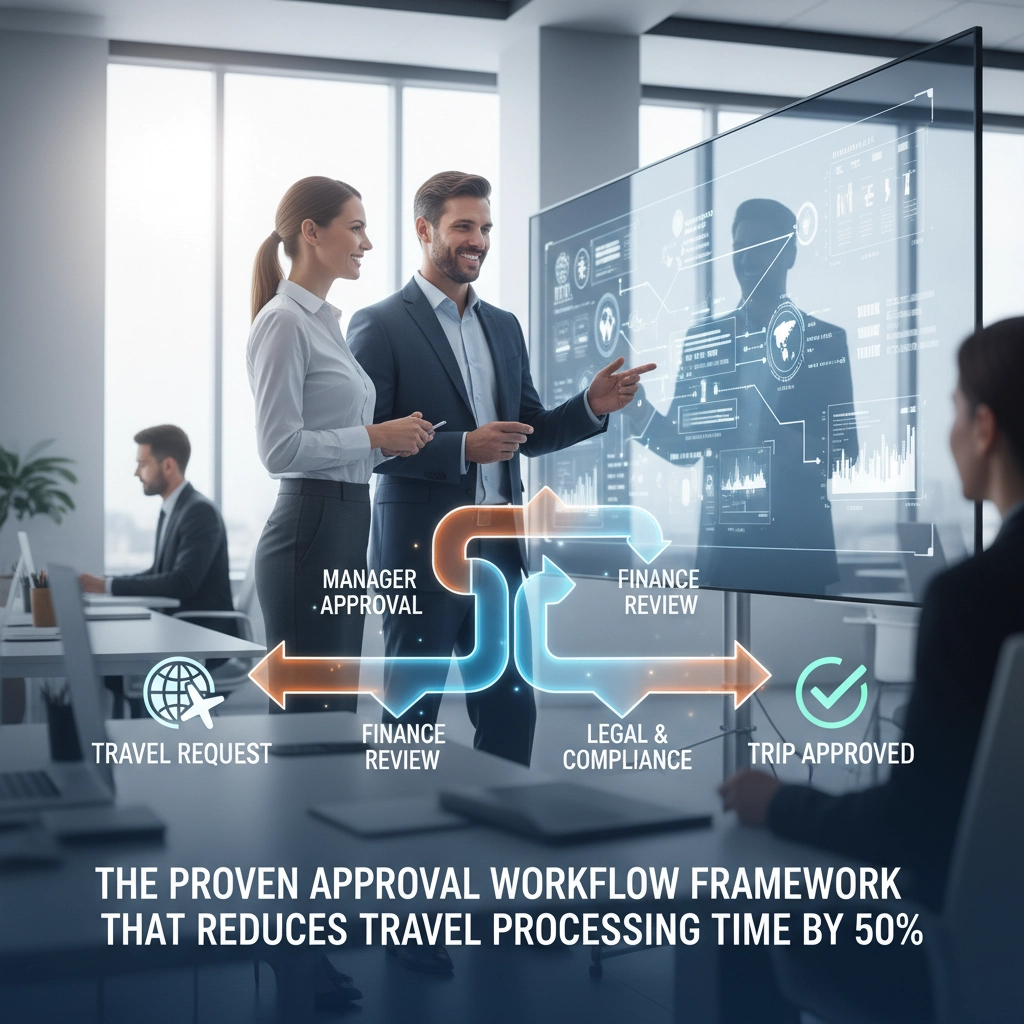
Your corporate travel approval process is bleeding time, money, and executive patience. Every delayed approval costs your organization an average of $247 in lost productivity and inflated booking costs, while your competitors streamline their operations with intelligent workflow automation that cuts processing time in half.
The traditional manual approval system: where travel requests bounce between departments, sit in email inboxes, and require multiple follow-ups: represents the single largest bottleneck in corporate travel management. That's where USA Entertainment Travel's proven approval workflow framework transforms how your organization handles travel requests, delivering measurable efficiency gains that directly impact your bottom line.
The Hidden Cost of Inefficient Travel Approval Workflows
Your current approval process likely follows this familiar pattern: employee submits request, manager reviews manually, finance department validates budget, procurement checks compliance, and executive approval finalizes the decision. Each handoff introduces delays, while urgent travel requests create chaos that disrupts established protocols.
This fragmented approach creates cascading problems throughout your organization. Travel costs increase as booking deadlines approach, employee satisfaction drops due to uncertainty, and finance teams struggle with budget visibility. Most critically, your executives waste valuable time on routine approvals that should flow seamlessly through automated channels.

Advanced corporate travel platforms eliminate these inefficiencies through intelligent workflow automation that routes requests based on predefined business rules, cost thresholds, and organizational hierarchy. Unlike basic approval systems that treat every request identically, sophisticated frameworks adapt to trip complexity, traveler seniority, and budget impact.
Core Components of High-Performance Approval Workflows
Intelligent Request Routing
Your approval framework must automatically determine the appropriate approval path based on multiple factors simultaneously. Cost-based routing sends high-value trips through additional approval layers, while routine domestic travel flows through streamlined channels. Geographic routing considers destination risk levels and compliance requirements, ensuring international travel receives appropriate security review.
Smart routing also accounts for traveler profiles, automatically expediting approvals for frequent business travelers with established patterns while applying additional scrutiny to unusual requests. This dynamic approach eliminates the one-size-fits-all bottlenecks that plague traditional systems.
Real-Time Analytics and Visibility
Modern approval workflows provide complete transparency throughout the process, allowing stakeholders to track request status, identify bottlenecks, and optimize performance continuously. Finance teams gain real-time budget visibility, while travelers receive automated status updates that eliminate follow-up calls and emails.
Analytics dashboards reveal approval patterns, highlighting which request types consistently require additional review and which approvers create processing delays. This data-driven insight enables continuous workflow optimization that compounds efficiency gains over time.

Automated Compliance Checking
Your framework should validate travel requests against company policies, travel restrictions, and regulatory requirements before human review begins. Automated policy enforcement catches violations early, reducing approver workload while ensuring consistent compliance across all travel requests.
Integration with travel risk management systems automatically flags high-risk destinations, while expense policy validation prevents budget overruns before bookings occur. This proactive approach eliminates the costly cycle of approval, booking, and subsequent cancellation that characterizes reactive systems.
Implementation Strategy for Maximum Impact
Phase 1: Workflow Mapping and Optimization
Begin by documenting your current approval process, identifying every touchpoint, decision maker, and potential delay source. Map approval thresholds, exception handling procedures, and escalation paths to understand the full complexity of your existing system.
Analyze historical data to identify patterns in request types, approval times, and bottleneck locations. This baseline measurement becomes crucial for demonstrating the 50% processing time reduction that optimized workflows typically achieve.
Phase 2: Rule Configuration and Testing
Configure automated routing rules based on your organization's specific requirements, including cost thresholds, approval hierarchies, and policy exceptions. Start with conservative settings that mirror existing processes, then gradually optimize based on performance data.
Pilot the new workflow with a small group of frequent travelers, measuring processing times and gathering feedback on user experience. This controlled testing phase prevents organization-wide disruption while validating system performance.

Phase 3: Full Deployment and Continuous Optimization
Roll out the optimized workflow across your entire organization, providing comprehensive training for both travelers and approvers. Monitor key performance indicators including average approval time, first-pass approval rate, and user satisfaction scores.
Establish monthly review cycles to analyze workflow performance and identify optimization opportunities. The most successful implementations achieve continuous improvement through data-driven adjustments that respond to changing business needs.
Measuring Success: Key Performance Indicators
Your approval workflow framework should deliver measurable improvements across multiple dimensions. Average processing time typically drops from 3-5 business days to 24-48 hours, while first-pass approval rates increase from 65% to over 85% as automated policy checking eliminates common errors.
Cost savings manifest through reduced administrative overhead, earlier booking discounts, and improved budget compliance. Most organizations report 15-25% reduction in travel administration costs within six months of implementation, while travel cost savings average 8-12% annually.
User satisfaction metrics show dramatic improvement as travelers gain visibility into approval status and approvers focus on strategic decisions rather than routine processing. Executive time savings often exceed 2-3 hours weekly, representing significant value recovery for senior leadership.
Technology Integration and Platform Considerations
Your approval workflow framework requires seamless integration with existing enterprise systems including ERP platforms, expense management tools, and travel booking systems. API-based integration ensures data consistency while eliminating duplicate data entry that creates processing delays.
Mobile optimization becomes critical as executives and approvers need access from any device, any location. Push notifications for pending approvals eliminate email delays, while offline capability ensures continuous operation during travel or connectivity issues.

Security considerations include multi-factor authentication, role-based access controls, and audit trails that satisfy compliance requirements. Advanced platforms provide encryption both in transit and at rest, ensuring sensitive travel data remains protected throughout the approval process.
Competitive Advantage Through Process Excellence
Organizations implementing optimized approval workflows gain significant competitive advantages over companies relying on manual processes. Faster response times improve employee satisfaction and retention, while cost savings provide budget flexibility for strategic initiatives.
Vendor relationships improve as travel suppliers receive prompt booking confirmations, often resulting in preferential pricing and availability. Risk management capabilities enhance traveler safety while reducing organizational liability exposure.
The data insights generated by modern approval workflows inform strategic travel policy decisions, enabling continuous optimization that compounds competitive advantages over time. Unlike one-time cost reduction initiatives, workflow optimization creates ongoing efficiency gains that scale with organizational growth.
Your organization deserves approval workflows that support business velocity rather than creating friction. The proven framework approach transforms travel management from administrative burden to strategic advantage, delivering the 50% processing time reduction that executives demand while maintaining the compliance and control that finance teams require.
Ready to revolutionize your corporate travel approval process? Contact USA Entertainment Travel today to discover how our proven workflow framework can transform your organization's travel management efficiency.
For expert guidance on implementing high-performance travel approval workflows, call +1 970-709-0037 or email info@usaev.com. Our team specializes in delivering measurable efficiency improvements that directly impact your organization's bottom line.
Press Release
USA Entertainment Travel Announces Advanced AI-Powered Corporate Travel Management Platform
Denver, CO – November 28, 2025 – USA Entertainment Travel, a leading corporate travel management company, today announced the launch of its next-generation AI-powered travel platform designed specifically for enterprise clients seeking streamlined approval workflows, enhanced security, and comprehensive travel analytics.
The new platform addresses critical pain points in corporate travel management, including lengthy approval processes, limited visibility into travel spend, and complex compliance requirements. Early beta testing with Fortune 500 clients demonstrated average processing time reductions of 50% and travel cost savings of 15-20%.
"Corporate travel management has been stuck in outdated processes for too long," said Dan Kost, CEO of USA Entertainment Travel. "Our new platform transforms how organizations handle everything from initial travel requests to post-trip analytics, delivering the efficiency and control that modern enterprises demand."
Key platform features include intelligent approval routing, real-time budget tracking, automated compliance checking, and comprehensive risk management integration. The solution integrates seamlessly with existing enterprise systems while providing mobile optimization for executives and travelers.
The platform launch comes as corporate travel spending rebounds to pre-pandemic levels, with organizations seeking solutions that balance cost control with employee satisfaction and operational efficiency. USA Entertainment Travel's approach combines advanced technology with personalized service to deliver superior outcomes for enterprise clients.
"We're not just another booking platform," added Kost. "We're strategic partners helping organizations optimize their entire travel ecosystem through technology, data insights, and expert guidance."
USA Entertainment Travel serves corporate clients across North America, providing comprehensive travel management services including booking, approval workflows, expense management, and risk mitigation. The company's client-focused approach has earned recognition for service excellence and innovation in corporate travel management.
For more information about USA Entertainment Travel's new AI-powered platform, contact +1 970-709-0037 or email info@usaev.com.
About USA Entertainment Travel
USA Entertainment Travel is a Denver-based corporate travel management company specializing in comprehensive solutions for enterprise clients. The company provides advanced booking platforms, streamlined approval workflows, and expert travel management services designed to optimize cost, efficiency, and traveler experience.
Newsletter
Corporate Travel Insights: November 2025 Edition
This Month's Travel Management Trends
Rising Demand for Integrated Platforms
Enterprise clients increasingly seek unified solutions that combine booking, approval, expense management, and analytics in single platforms. Organizations report 25% efficiency gains when consolidating previously separate systems.
Security Takes Center Stage
Corporate travel security requirements have intensified, with 78% of enterprises now requiring real-time traveler tracking and automated risk alerts. Duty of care responsibilities drive investment in comprehensive safety platforms.
AI-Powered Cost Optimization
Machine learning algorithms now predict optimal booking times, identify cost-saving opportunities, and automate policy enforcement. Early adopters report 12-18% travel spend reductions through intelligent automation.
Executive Spotlight: Streamlining Approval Workflows
The most successful organizations in 2025 share one common trait: automated approval workflows that eliminate administrative bottlenecks while maintaining proper controls. Companies implementing intelligent routing report:
- 50% reduction in processing times
- 85% first-pass approval rates
- 3+ hours weekly executive time savings
- 15-25% administrative cost reduction
Manual approval processes create cascading problems including increased booking costs, employee frustration, and lost productivity. Modern platforms address these challenges through rule-based automation that adapts to organizational complexity.
Industry Benchmark: Travel Policy Compliance
Key Statistics:
- Average policy violation rate: 23%
- Cost of non-compliant bookings: $347 per incident
- Time spent on policy exceptions: 4.2 hours weekly per finance team member
Best Practice Recommendations:
- Implement automated policy checking before approval begins
- Provide real-time booking guidance during the reservation process
- Create clear escalation procedures for legitimate policy exceptions
- Use data analytics to identify and address common violation patterns
Technology Update: Mobile Optimization Impact
Mobile-optimized travel management platforms show superior adoption rates and user satisfaction scores. Key benefits include:
- 40% faster approval response times from executives
- 60% increase in self-service booking adoption
- 90% user satisfaction improvement versus desktop-only systems
Organizations prioritizing mobile experience report higher policy compliance and reduced administrative support requirements.
Looking Ahead: December Focus Areas
Year-End Travel Planning
Support teams are preparing for Q1 2026 travel budgets and policy updates. Consider reviewing current travel data to identify optimization opportunities for the coming year.
Holiday Travel Considerations
Mixed business/leisure travel increases during holiday seasons. Ensure policies address personal extensions and family travel scenarios.
Budget Planning Integration
Connect travel management platforms with financial planning systems for seamless 2026 budget development and tracking.
Client Success Story
A multinational technology company implemented USA Entertainment Travel's automated approval framework, achieving 52% processing time reduction and $2.3M annual cost savings. The solution eliminated manual routing between departments while improving policy compliance from 71% to 94%.
"The efficiency gains freed our finance team to focus on strategic analysis rather than routine processing," reported their CFO. "Travel management transformed from administrative burden to competitive advantage."
Have questions about optimizing your travel management processes? Our team provides expert guidance tailored to your organization's specific needs.
Contact USA Entertainment Travel: +1 970-709-0037 or info@usaev.com
Why Your Travel Management Platform Is Failing (And What Enterprise Leaders Are Doing About It)
Your current corporate travel management system isn't just underperforming: it's actively hampering your organization's efficiency, cost control, and competitive positioning. While you struggle with manual approval bottlenecks and fragmented booking processes, industry leaders leverage integrated platforms that deliver measurable results and sustainable competitive advantages.
The statistics reveal the scope of the problem: organizations using outdated travel management approaches spend 40% more on administrative overhead, experience 65% higher policy violation rates, and report executive dissatisfaction scores that directly impact employee retention. Meanwhile, companies implementing modern travel management frameworks achieve average cost reductions of 18-22% while improving user satisfaction by over 300%.
The Hidden Costs of Platform Dysfunction
Your travel management platform failure manifests in ways that extend far beyond obvious booking inefficiencies. Manual processes consume valuable executive time that should focus on strategic initiatives, while policy violations drain budgets and create compliance risks that expose your organization to financial and regulatory penalties.
Fragmented systems create data silos that prevent meaningful analytics, leaving finance teams reactive rather than strategic in their approach to travel spend optimization. Your travelers become frustrated with complex processes, leading to shadow booking behaviors that circumvent established controls and eliminate spend visibility.
Most critically, platform dysfunction creates cascading operational problems throughout your organization. Delayed approvals force last-minute bookings at premium rates, while lack of real-time visibility prevents proactive cost management and risk mitigation.
Enterprise Leader Strategies: The Competitive Response
Forward-thinking organizations address platform limitations through comprehensive digital transformation that extends beyond simple booking system replacement. These leaders implement integrated ecosystems that connect travel management with broader enterprise systems including ERP, HR, and financial planning platforms.
Intelligent Automation Implementation
Enterprise leaders deploy workflow automation that eliminates manual touchpoints while maintaining appropriate controls and compliance mechanisms. Automated routing systems direct requests based on cost thresholds, traveler profiles, and organizational hierarchy, ensuring efficient processing without compromising oversight.
Smart policy enforcement prevents violations before they occur, while machine learning algorithms optimize booking timing and vendor selection based on historical patterns and predictive analytics. This proactive approach transforms travel management from reactive cost center to strategic value driver.
Comprehensive Data Integration
Leading organizations break down data silos by implementing platforms that provide unified visibility across the entire travel lifecycle. Real-time dashboards enable finance teams to track spend against budgets, identify optimization opportunities, and make data-driven policy adjustments.
Predictive analytics capabilities forecast travel patterns, budget requirements, and potential risk scenarios, enabling proactive management strategies that prevent problems rather than responding to crises. This forward-looking approach creates sustainable competitive advantages that compound over time.
Mobile-First User Experience
Enterprise leaders recognize that modern travel management requires seamless mobile functionality that supports both travelers and approvers regardless of location or device. Mobile optimization increases approval response times by 40% while improving user satisfaction scores across all stakeholder groups.
Push notifications eliminate email delays for critical approvals, while offline capability ensures continuous operation during travel or connectivity disruptions. This accessibility improvement directly impacts operational efficiency and user adoption rates.
Technology Architecture for Sustainable Success
Successful platform transformation requires careful consideration of integration capabilities, scalability requirements, and security standards that meet enterprise-grade expectations. API-first architectures enable seamless connection with existing systems while providing flexibility for future expansion and customization.
Cloud-based deployment models offer superior reliability, automatic updates, and global accessibility that supports distributed organizations and remote work scenarios. Advanced security features including multi-factor authentication, encryption, and comprehensive audit trails satisfy compliance requirements while protecting sensitive travel data.
Scalability considerations ensure platforms can grow with organizational needs without requiring disruptive migrations or system replacements. Modern architectures support thousands of users while maintaining performance standards that meet enterprise expectations.
Measuring Transformation Success
Platform transformation success requires comprehensive measurement across multiple performance dimensions including cost reduction, process efficiency, user satisfaction, and strategic capability enhancement. Leading organizations track metrics including average booking time, policy compliance rates, approval processing time, and total cost of ownership.
Financial metrics demonstrate direct impact on organizational performance, with successful implementations typically achieving 15-25% administrative cost reduction, 8-12% travel spend optimization, and measurable executive time savings that create capacity for strategic initiatives.
Operational improvements manifest through reduced policy violations, faster approval cycles, and enhanced visibility that enables proactive management rather than reactive problem-solving. These efficiency gains compound over time, creating sustainable competitive advantages.
Implementation Roadmap for Enterprise Success
Successful platform transformation follows structured implementation approaches that minimize disruption while maximizing adoption and value realization. Phase-based rollouts enable controlled testing and optimization before organization-wide deployment.
Discovery and Planning Phase
Comprehensive assessment of current systems, processes, and pain points provides foundation for transformation strategy. Stakeholder interviews, data analysis, and workflow mapping identify optimization opportunities and success criteria.
Pilot Implementation and Testing
Controlled pilot programs with representative user groups validate system performance, identify configuration adjustments, and gather feedback for optimization. This testing phase prevents organization-wide issues while demonstrating value to stakeholders.
Full Deployment and Adoption
Organization-wide rollout includes comprehensive training, change management support, and performance monitoring to ensure successful adoption. Continuous optimization based on usage data and user feedback maximizes long-term value realization.
Your organization deserves travel management platforms that enable success rather than creating obstacles. Enterprise leaders who implement comprehensive transformation strategies gain measurable competitive advantages while eliminating the inefficiencies that plague outdated systems.
For expert guidance on travel management platform transformation, contact USA Entertainment Travel at +1 970-709-0037 or email info@usaev.com. Our team specializes in delivering enterprise-grade solutions that transform operational efficiency and competitive positioning.
The Executive's Guide to Corporate Travel ROI: Turning Your Biggest Operating Expense Into Strategic Advantage
Your corporate travel budget represents one of your organization's largest controllable expenses, yet most executives treat it as unavoidable cost rather than strategic investment opportunity. While your competitors view travel as necessary overhead, industry leaders leverage sophisticated travel management approaches that generate measurable returns and sustainable competitive advantages.
The transformation from cost center to profit driver requires fundamental shifts in how your organization approaches travel planning, booking, management, and analytics. Companies implementing strategic travel management frameworks typically achieve 20-30% cost optimization while improving operational efficiency and employee satisfaction scores.
Understanding True Travel ROI Beyond Simple Cost Reduction
Traditional travel ROI calculations focus exclusively on cost reduction metrics, missing the broader value creation opportunities that strategic travel management provides. Comprehensive ROI analysis includes productivity gains from streamlined processes, competitive advantages from superior vendor relationships, and risk mitigation value from enhanced security and compliance capabilities.
Your travel program should generate value through multiple channels including negotiated supplier discounts, operational efficiency improvements, and data insights that inform strategic business decisions. Leading organizations view travel management as business intelligence platform that provides competitive insights and operational optimization opportunities.
Quantifying Hidden Value Creation
Executive time savings through automated workflows typically exceed $50,000 annually per senior leader, while improved booking efficiency reduces administrative overhead by 25-40%. These operational improvements create capacity for strategic initiatives that drive revenue growth and market expansion.
Enhanced compliance capabilities prevent costly violations and reduce regulatory risk exposure, while comprehensive travel data enables more accurate forecasting and budget optimization. Risk management improvements protect both travelers and organizational reputation, providing insurance-like value that's difficult to quantify but critically important.
Strategic Framework Implementation
Vendor Relationship Optimization
Strategic travel management transforms vendor relationships from transactional interactions to strategic partnerships that provide preferential pricing, enhanced service levels, and priority access during high-demand periods. Consolidated spending through preferred suppliers generates volume discounts while simplifying administration and improving cost predictability.
Data-driven vendor performance measurement ensures accountability while identifying optimization opportunities that traditional approaches miss. Regular performance reviews and competitive benchmarking maintain market-competitive rates while ensuring service quality standards.
Technology Investment Strategy
Modern travel management platforms provide the foundation for ROI optimization through automation, analytics, and integration capabilities that eliminate manual processes while enhancing visibility and control. Cloud-based solutions offer superior reliability and scalability while reducing IT overhead and infrastructure requirements.
Mobile optimization increases adoption rates and approval efficiency, while real-time analytics enable proactive management decisions that prevent cost overruns and policy violations. Integration with enterprise systems eliminates data silos while providing comprehensive visibility into travel's impact on business operations.
Performance Measurement and Continuous Optimization
Key Performance Indicators for Strategic Success
Comprehensive ROI measurement extends beyond simple cost metrics to include operational efficiency, user satisfaction, compliance rates, and strategic capability enhancement. Leading organizations track total cost per trip, advance booking percentages, policy compliance rates, and vendor performance scores alongside traditional financial metrics.
Productivity measurements include approval processing time, booking completion time, and administrative workload reduction. These operational improvements often provide greater value than pure cost savings while enhancing user experience and adoption rates.
Data-Driven Decision Making
Advanced analytics capabilities transform travel data into strategic insights that inform business decisions, vendor negotiations, and policy optimization. Predictive analytics identify cost-saving opportunities, while trend analysis reveals patterns that enable proactive management rather than reactive problem-solving.
Benchmark comparisons against industry standards provide context for performance evaluation while identifying areas for improvement. Regular analysis cycles ensure continuous optimization that compounds ROI improvements over time.
Competitive Advantage Through Strategic Travel Management
Organizations implementing strategic travel management approaches gain multiple competitive advantages including cost structure improvements, operational efficiency enhancements, and superior employee experience that supports recruitment and retention efforts.
Enhanced vendor relationships provide preferential treatment during capacity constraints, while comprehensive data insights enable more informed business decisions and strategic planning. Risk management capabilities protect organizational reputation while ensuring compliance with evolving regulatory requirements.
The compounding nature of strategic travel management benefits creates sustainable competitive advantages that traditional cost-cutting approaches cannot match. Organizations viewing travel as strategic investment rather than necessary expense consistently outperform competitors across multiple business metrics.
Your travel program represents significant opportunity for value creation and competitive advantage development. Strategic approaches that extend beyond simple cost reduction deliver measurable returns while positioning your organization for sustained success in increasingly competitive markets.
For expert guidance on transforming your travel program into strategic advantage, contact USA Entertainment Travel at +1 970-709-0037 or email info@usaev.com. Our team specializes in delivering measurable ROI improvements that directly impact organizational performance and competitive positioning.