
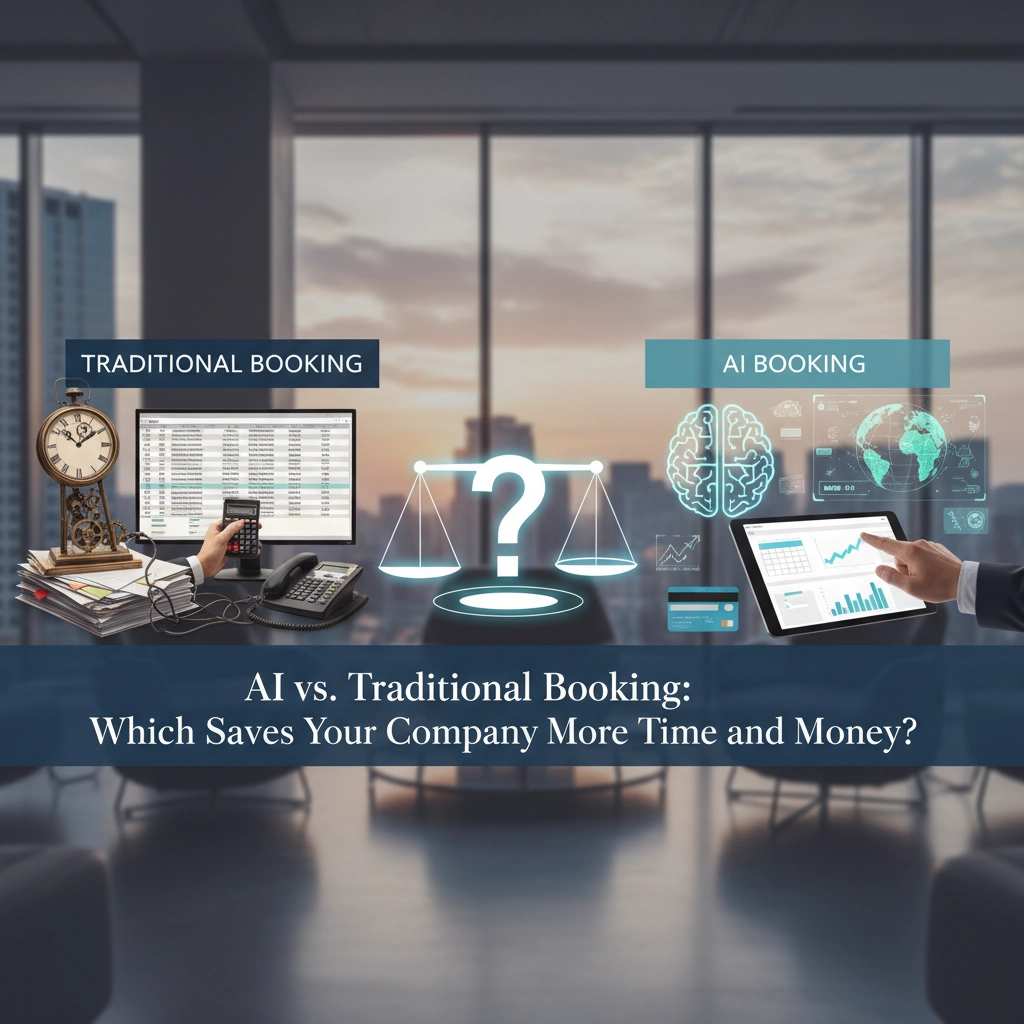
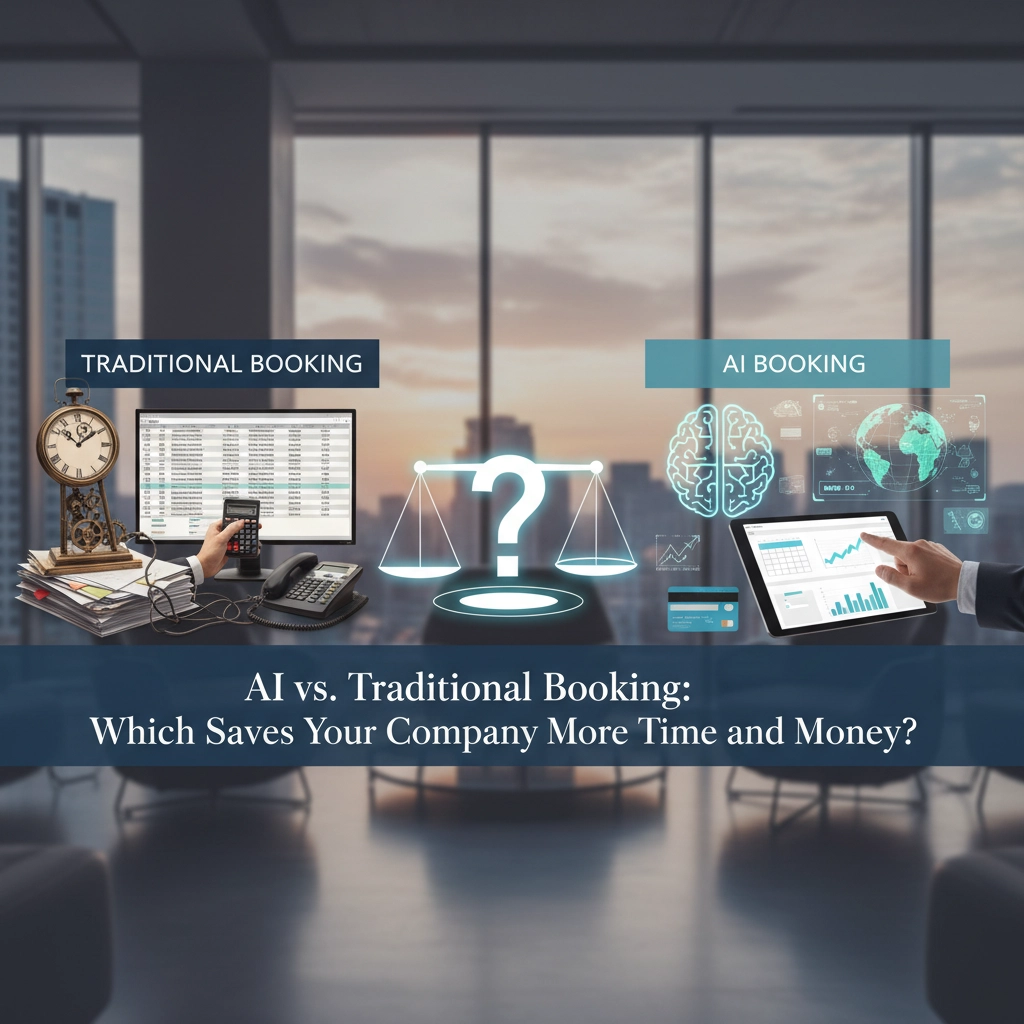
Your corporate travel budget is under scrutiny, and every booking decision impacts your bottom line. The question isn't whether to modernize your booking process: it's which approach delivers the best return on investment for your specific business needs.
AI booking systems and traditional methods each offer distinct advantages, and the right choice depends on your company's travel volume, complexity requirements, and cost priorities. Let's examine both approaches to help you make an informed decision that maximizes efficiency while controlling expenses.
The Current State of Corporate Travel Booking
Corporate travel spending reached $1.4 trillion globally in 2023, yet many companies still rely on outdated booking processes that drain resources and create inefficiencies. Your booking method directly impacts employee productivity, vendor relationships, and overall travel program ROI.
Traditional booking methods dominated corporate travel for decades, but AI-powered solutions are rapidly transforming how companies manage travel logistics. The shift isn't just about technology: it's about strategic advantage in an increasingly competitive business environment.

AI Booking Systems: The Digital Advantage
AI booking platforms leverage machine learning and automation to streamline your entire travel management process. These systems excel at processing routine bookings instantly, regardless of volume or timing constraints.
Speed and Scalability Benefits
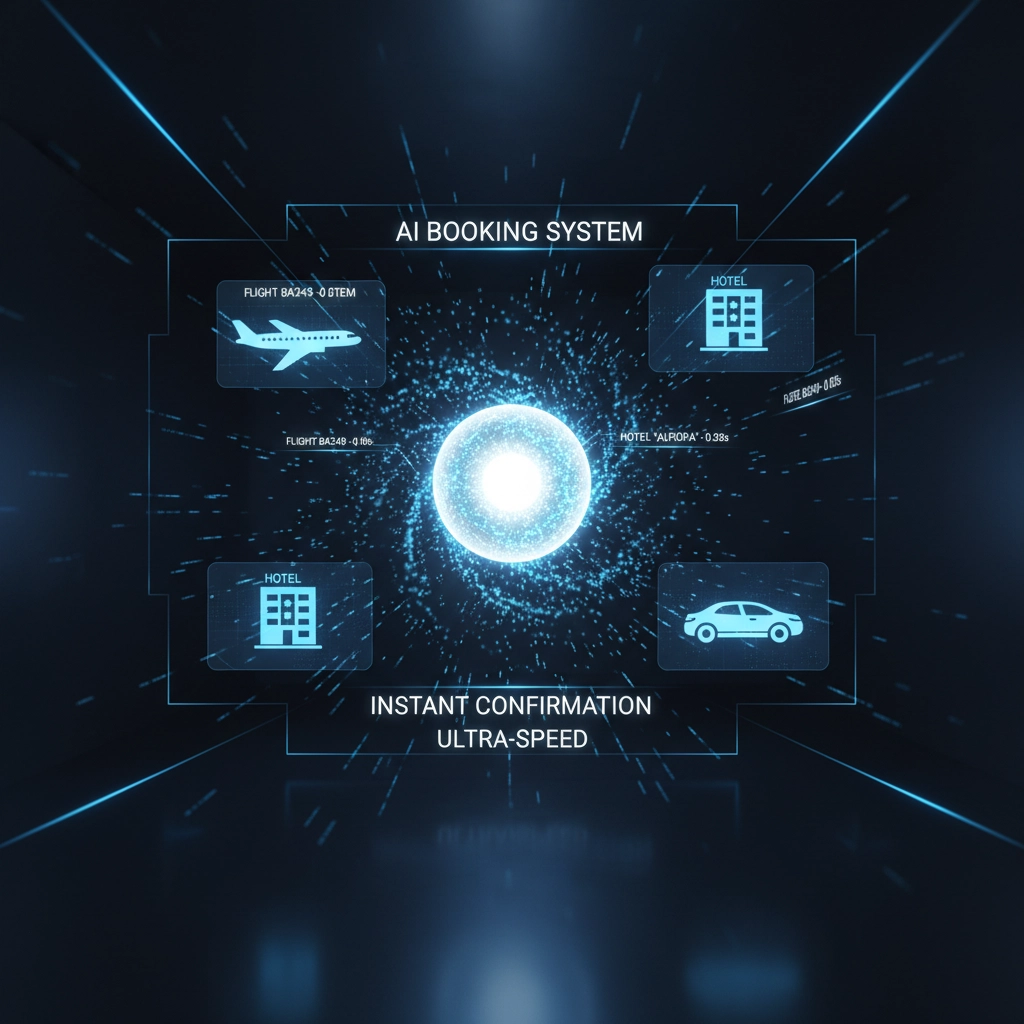
AI systems process standard bookings in seconds rather than minutes or hours. Your employees can book flights, hotels, and ground transportation through intuitive interfaces that learn from previous decisions. During peak travel seasons or urgent booking situations, AI maintains consistent performance without the bottlenecks that plague manual systems.
The scalability advantage becomes crucial as your company grows. AI platforms handle thousands of simultaneous booking requests without degraded performance, while traditional methods require proportional increases in staff and overhead costs.
Cost Structure Advantages
AI booking delivers predictable pricing that typically decreases per transaction as usage increases. You avoid the variable labor costs associated with human agents, and many AI platforms offer transparent fee structures that simplify budget planning.
Most AI systems also provide real-time expense tracking and policy compliance monitoring, reducing the administrative burden on your finance team. Automated reporting capabilities eliminate manual data compilation, freeing your staff for strategic initiatives.
Error Reduction and Compliance
AI dramatically reduces booking errors that cost companies thousands in change fees and disrupted itineraries. These systems cross-reference company policies, preferred vendor agreements, and traveler preferences to ensure compliant bookings.
Automated approval workflows route high-value or policy-exception bookings to appropriate managers, maintaining oversight without slowing routine transactions. Integration with expense management systems creates seamless documentation for accounting and reimbursement processes.
Traditional Booking Methods: The Human Touch
Human-managed booking relies on experienced agents who bring industry knowledge and problem-solving capabilities to complex travel scenarios. These professionals excel in situations requiring negotiation, creative solutions, and personalized service.
Complex Scenario Expertise
Travel agents shine when handling multi-city itineraries, international travel with visa requirements, or bookings involving special accommodations. Your VIP executives often require customized arrangements that benefit from human insight and relationship management.
When disruptions occur: flight cancellations, weather delays, or last-minute changes: experienced agents can negotiate with suppliers, find alternative solutions, and coordinate complex rebooking scenarios that might overwhelm automated systems.
Relationship and Negotiation Value
Established travel agents maintain relationships with airlines, hotels, and other suppliers that can yield exclusive rates, priority treatment, and flexibility during high-demand periods. These relationships often translate to better upgrade opportunities and preferential treatment for your travelers.
Human agents can also negotiate group rates for large events or recurring travel patterns, potentially delivering savings that offset higher service fees.
Personalization and Cultural Knowledge
Experienced agents understand destination-specific considerations, cultural factors, and local preferences that enhance traveler experience and safety. This knowledge becomes particularly valuable for international business travel or executive-level trips where details matter significantly.
Direct Cost and Time Comparison
| Factor | AI Booking Systems | Traditional Methods |
|---|---|---|
| Processing Time | 30 seconds – 2 minutes | 15-45 minutes per booking |
| Availability | 24/7 global access | Business hours only |
| Cost per Booking | $5-15 platform fees | $25-75 agent commissions |
| Volume Scalability | Unlimited simultaneous users | Limited by agent capacity |
| Policy Compliance | 95%+ automatic enforcement | 70-85% with manual oversight |
| Error Rates | <2% booking errors | 5-8% manual entry errors |
| Emergency Support | Basic automated rebooking | Full-service problem resolution |
| Complex Itineraries | Limited capability | Expert-level handling |

ROI Analysis: When Each Method Wins
Choose AI Booking When:
Your company processes more than 50 bookings monthly with straightforward domestic or standard international travel requirements. AI delivers clear ROI advantages for routine business travel, especially when employee time savings factor into calculations.
Companies with distributed teams across multiple time zones benefit significantly from 24/7 booking availability. The cost savings compound quickly: a company processing 200 bookings monthly can save $15,000-30,000 annually on booking fees alone.
AI also makes sense when policy compliance is a priority. Automated enforcement reduces maverick spending and ensures preferred vendor utilization, often recovering implementation costs within 6-12 months.
Choose Traditional Methods When:
Your travel program involves frequent complex international itineraries, VIP services, or high-value transactions where personalized service justifies premium costs. Companies with significant group travel or event management needs often benefit from agent expertise and supplier relationships.
Traditional methods also prove valuable for companies prioritizing relationship-based service or operating in industries where travel disruptions carry high business costs. The investment in human agents pays off when expert problem-solving prevents missed meetings or damaged client relationships.
The Hybrid Approach: Maximizing Both Advantages
Smart companies increasingly adopt hybrid models that leverage AI for routine bookings while maintaining human support for complex scenarios. This approach typically routes 70-80% of bookings through AI platforms while reserving agent services for high-value or complicated arrangements.
Hybrid systems deliver cost optimization without sacrificing service quality. You maintain the speed and cost benefits of AI for standard travel while ensuring expert support for situations requiring human judgment and negotiation skills.
Implementation often involves setting threshold triggers: bookings above certain values, international travel, or multi-city itineraries automatically route to human agents, while routine domestic flights and hotel bookings process through AI systems.

Implementation Considerations
Technology Integration
AI booking systems require integration with your existing expense management, HR, and accounting systems. Evaluate vendors based on integration capabilities, data security standards, and ongoing support quality.
Most modern AI platforms offer APIs and pre-built connectors for popular enterprise software, but custom integration may require IT resources and implementation time.
Change Management
Employee adoption represents the biggest implementation challenge. Successful rollouts include comprehensive training, clear communication about benefits, and ongoing support during transition periods.
Consider piloting new systems with frequent travelers or specific departments before company-wide deployment. Feedback from early adopters helps refine processes and address concerns before broader implementation.
Performance Measurement
Establish baseline metrics before implementation to measure ROI accurately. Key performance indicators include booking time, cost per transaction, policy compliance rates, and traveler satisfaction scores.
Regular performance reviews ensure your chosen solution continues meeting company needs as travel patterns and business requirements evolve.
Making Your Decision
Your optimal booking solution depends on travel volume, complexity requirements, and strategic priorities. Companies processing high volumes of routine business travel typically achieve better ROI with AI systems, while organizations with complex international travel or VIP service requirements often benefit from traditional methods or hybrid approaches.
Consider your company's growth trajectory when evaluating options. AI platforms scale seamlessly with business expansion, while traditional methods require proportional increases in agent relationships and service fees.

Start by analyzing your current booking patterns, identifying pain points, and calculating total costs including employee time, processing fees, and error-related expenses. This analysis provides the foundation for making an informed decision that optimizes both time and money for your corporate travel program.
The future of corporate travel booking lies in choosing the right tool for each situation, whether that's AI efficiency for routine needs or human expertise for complex scenarios. Your booking strategy should align with your company's operational requirements and strategic objectives.
Ready to optimize your corporate travel booking strategy? Our expert team at USA Entertainment Travel can help you evaluate your current process and implement the solution that best serves your company's needs.
Contact us today:
Phone: +1 970-709-0037
Email: info@usaev.com