

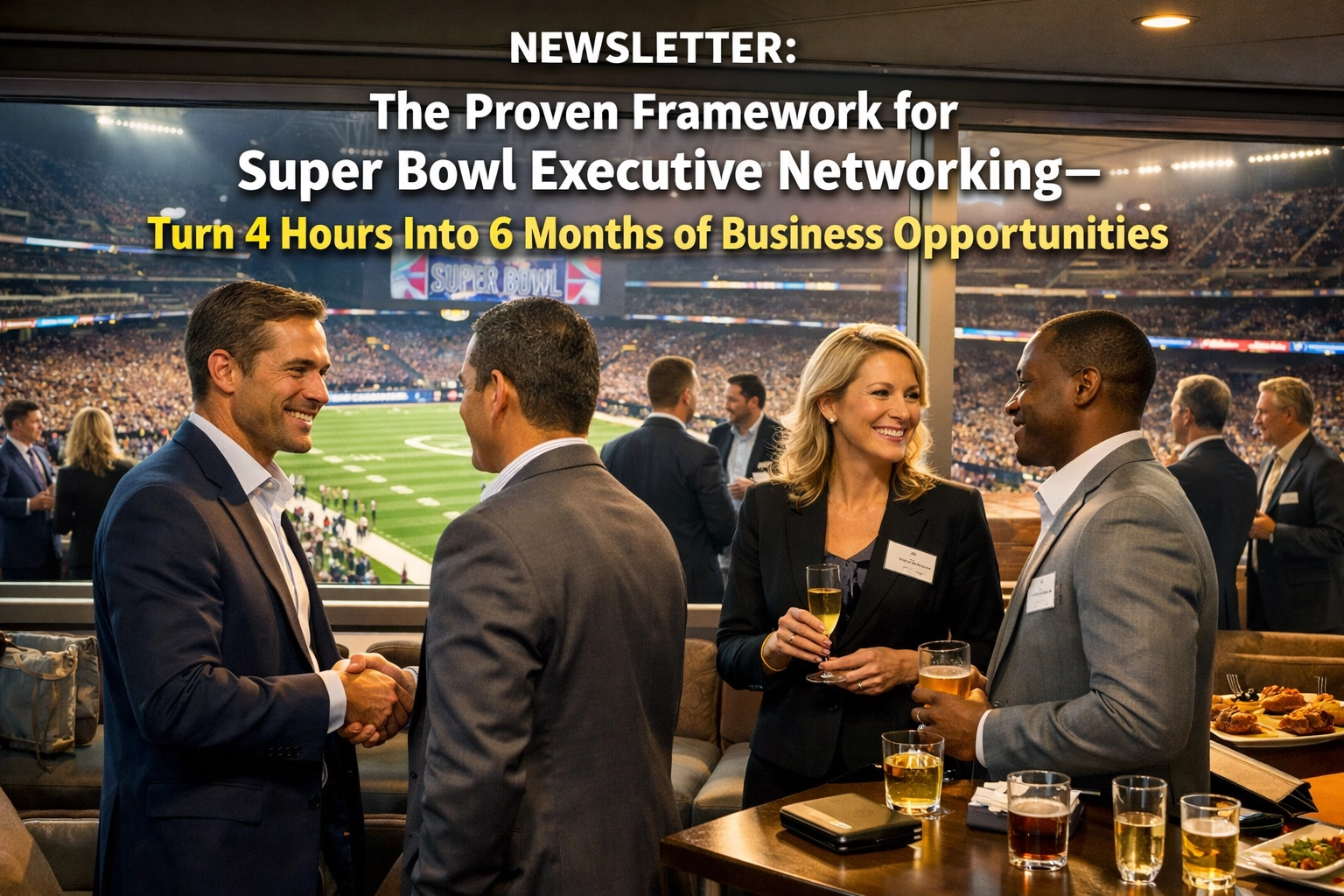
You've secured your Super Bowl tickets, arranged executive travel, and blocked out game day on your calendar. But here's the uncomfortable truth most CEOs discover too late: attending the Super Bowl costs tens of thousands of dollars, yet most executives walk away with nothing more than a few business cards and a memorable experience.
The difference between an expensive day off and a transformational business opportunity lies in your networking strategy. When you understand how to leverage the unique Super Bowl environment, those four hours inside the stadium become the foundation for six months of qualified meetings, partnership discussions, and revenue-generating relationships.
Why Super Bowl Networking Delivers Unprecedented ROI
The Super Bowl creates a networking environment that doesn't exist anywhere else in business. You're surrounded by decision-makers who've already demonstrated financial capacity, who share your appreciation for premium experiences, and who are actively engaged in relationship-building mode rather than sales-resistance mode.
Your prospects aren't hiding behind gatekeepers. They're sitting in the suite next to yours, walking the same concourse, and attending the same pre-game events. The psychological barriers that make cold outreach so challenging simply don't exist in this environment. And that's where your opportunity begins.
The Pre-Game Foundation: Strategic Positioning Before Kickoff
Your networking success starts 72 hours before you arrive at the stadium. Effective Super Bowl networking requires the same level of planning you'd apply to a major business presentation, because that's exactly what it is.
Start by identifying your target connections. Review the guest lists for your suite, your hotel, and any pre-game events you're attending. Cross-reference these names against your business development goals. Who are the decision-makers at companies you've been trying to reach? Which executives run complementary businesses that could become strategic partners?
Create your value proposition for each priority contact. You're not pitching your services at the Super Bowl: you're offering something valuable in the moment. Perhaps it's an introduction to someone in your network they've been trying to reach, insight about an industry trend affecting their business, or simply your expertise on a challenge they're facing. When you lead with value rather than ask, you transform the dynamic completely.
Schedule your arrival to maximize face-time opportunities. The most valuable networking happens in the 4-6 hours before kickoff, when executives are relaxed, social, and not yet focused on the game itself. Your travel logistics should position you at your hotel and pre-game events with plenty of buffer time for organic conversations.
The Suite Strategy: Converting Proximity Into Partnerships
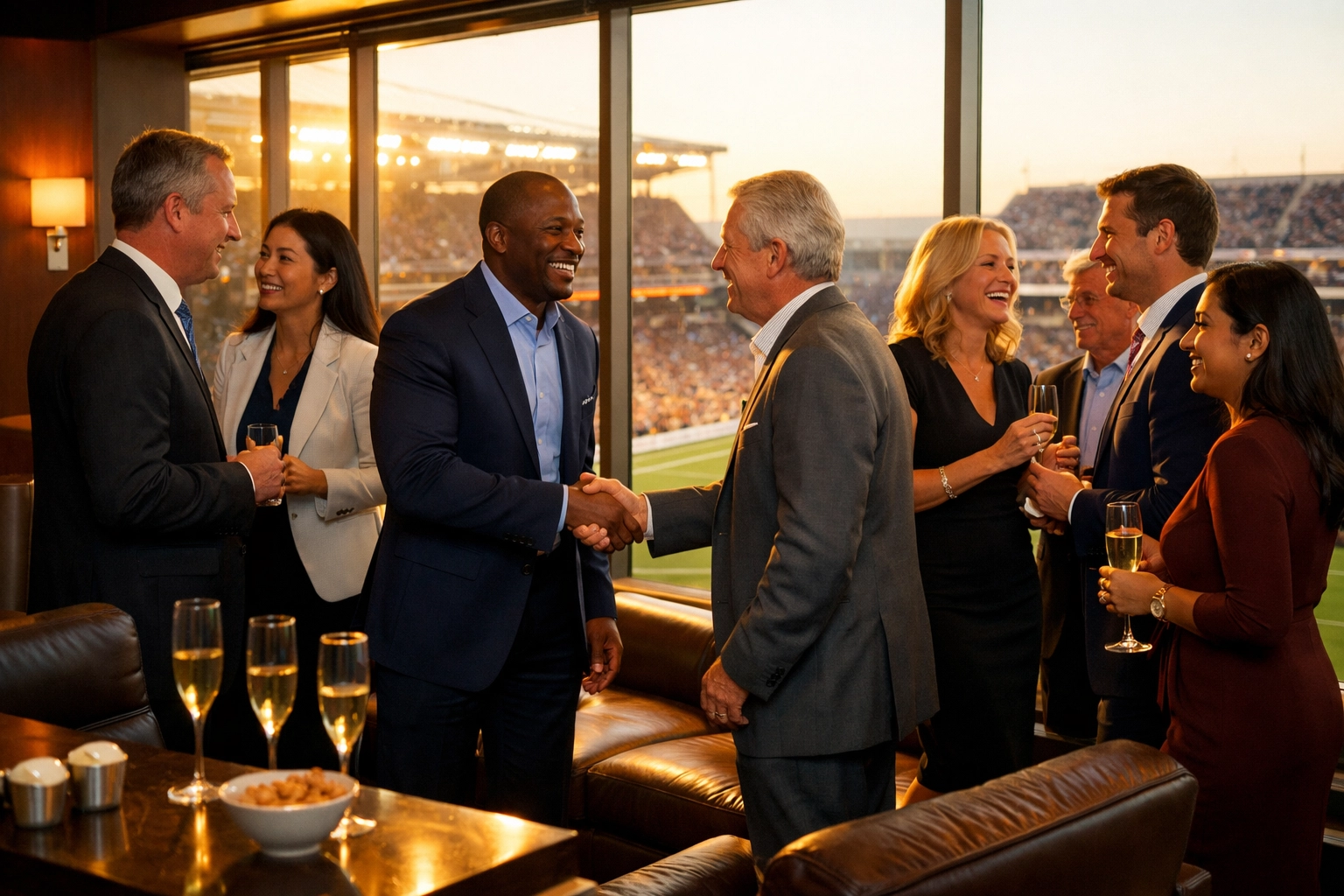
Your suite isn't just a viewing location: it's your boardroom for the day. The key is creating conversation opportunities that feel natural while strategically advancing your business objectives.
Position yourself at the suite entrance during the hour before kickoff. This isn't accident: you're placing yourself in the path of every executive who walks through. A simple "Have you tried the shrimp yet?" or "What did you think of the national anthem?" creates natural conversation starters that lead to business discussions.
Use the commercial breaks intentionally. These three-minute windows are when attention shifts away from the field and executives start checking phones and engaging with those around them. Have your conversation topics ready: industry observations, upcoming market shifts, or thoughtful questions about their business challenges. These brief exchanges often lead to "Let's continue this conversation next week" commitments.
For visual examples of how executives are leveraging major sporting events for networking success, check out this resource: https://www.youtube.com/watch?v=l6J-0zileKE

The Halftime Pivot: From Small Talk to Serious Opportunity
Halftime represents your highest-value 15 minutes of the entire event. The game isn't happening, alcohol has lowered social barriers, and everyone's in a celebratory, open mood. This is when casual acquaintances become genuine connections.
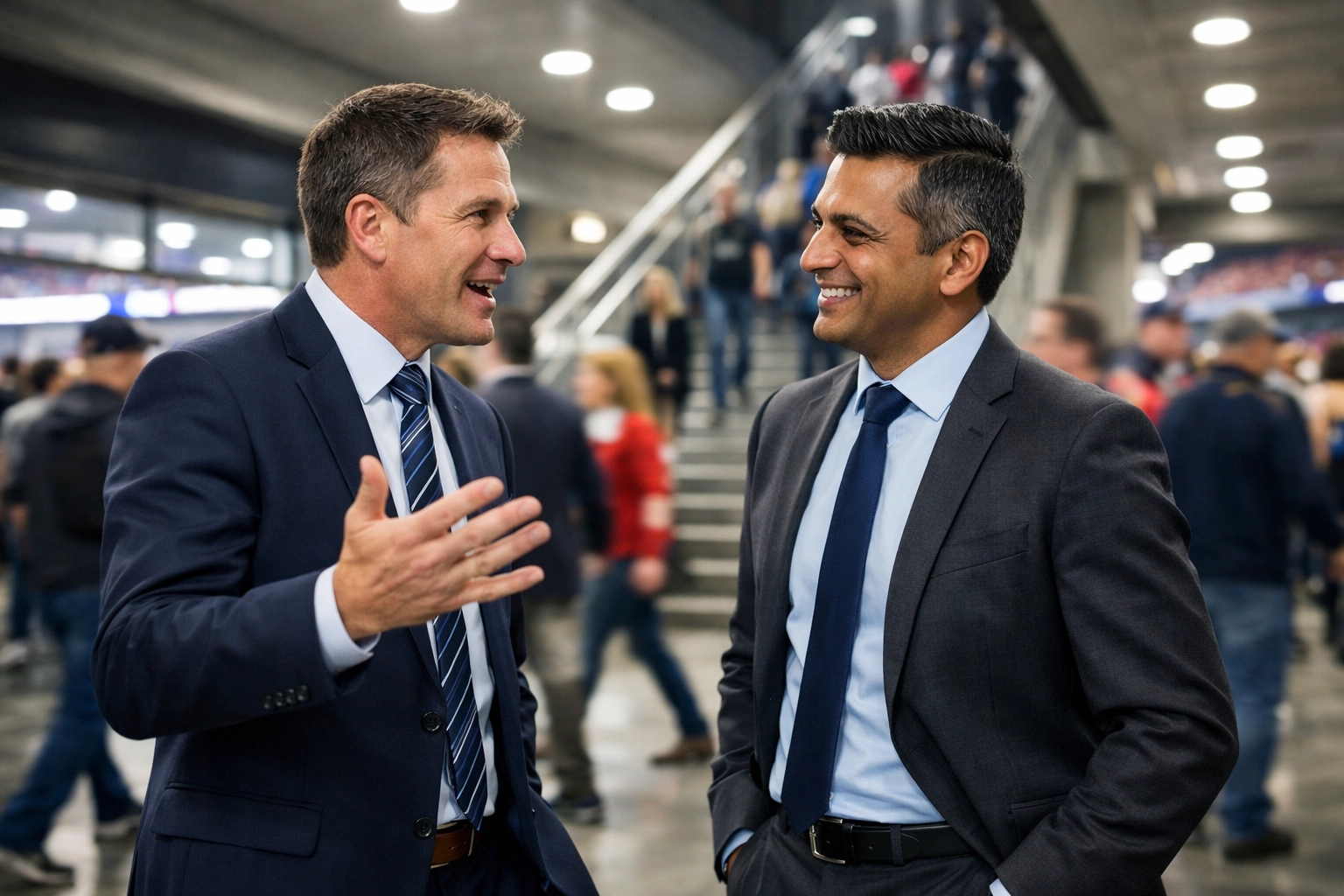
Move beyond your immediate suite. Walk the concourse, visit neighboring suites if you have connections there, and position yourself in high-traffic areas where you're likely to bump into other executives. A chance hallway encounter with a target prospect becomes a "small world" moment that creates instant rapport.
Document your conversations immediately. Step away and use your phone to record quick voice notes about each meaningful interaction: the person's name, their company, what you discussed, and the specific follow-up you committed to. Your follow-up effectiveness depends entirely on remembering these details, and you won't remember them by Monday morning without documentation.
Exchange contact information strategically. Don't just swap business cards: connect on LinkedIn while you're standing together. This creates an immediate digital relationship and ensures you're not relying on a business card that might get lost. Even better, send a quick text or LinkedIn message right then: "Great meeting you: I'll send that article I mentioned on Tuesday."
The Fourth Quarter Close: Securing Post-Game Commitments
As the game winds down, your networking strategy shifts from meeting new contacts to solidifying commitments with the connections you've made. The final quarter is about converting conversations into calendared meetings.
Be explicit about next steps. Instead of "Let's stay in touch," say "I'd love to continue this conversation about your expansion plans. Are you available for a call next Wednesday afternoon?" Specific asks get specific commitments. Vague suggestions get forgotten by Tuesday.
Leverage shared experience as a relationship foundation. The game you just watched together becomes a reference point for future conversations. "Remember when we talked about this during the Super Bowl?" creates instant recall and warmth. This shared memory transforms you from a random contact into someone associated with a positive, premium experience.
The Critical 48-Hour Follow-Up Window
Your networking ROI gets determined in the 48 hours after the final whistle, not during the game itself. This is where most executives drop the ball: they return to regular business operations and never follow up on their Super Bowl connections.
Send personalized follow-up emails by Monday afternoon at the latest. Reference specific conversation details to prove you were paying attention: "I've been thinking about the supply chain challenges you mentioned during halftime." Then deliver the value you promised, whether that's an introduction, an article, or specific advice.
Schedule actual meetings within the week. Don't leave follow-up in the abstract "we should get together sometime" zone. Propose specific dates and times for calls or in-person meetings. The urgency and enthusiasm from the Super Bowl event dissipates quickly: lock in commitments while the energy is still fresh.
Create a systematic follow-up plan for each contact tier. Your highest-priority connections get calls and multiple touchpoints. Secondary contacts get thoughtful emails and LinkedIn engagement. Even tertiary contacts should receive at least one personalized message acknowledging your conversation.
Building the Six-Month Relationship Pipeline
The real transformation happens when you view your Super Bowl networking as the beginning of a six-month relationship-building process, not a one-day event. Your framework for ongoing engagement determines whether these contacts become clients, partners, or just names in your database.
Create a content-sharing calendar for your new contacts. Every two weeks, send relevant industry articles, market insights, or business tools that align with the challenges you discussed. This positions you as a valuable resource rather than someone who only reaches out when they want something.
Invite select contacts to your next executive event. Whether it's another sporting event, a golf outing, or an industry conference, extending additional invitations deepens relationships and creates recurring touchpoints. Each interaction builds on the foundation you established at the Super Bowl.
Track conversation threads and business developments at their companies. When you notice news about their organization, send a congratulatory note or offer relevant insight. This ongoing engagement keeps you top-of-mind when they're ready to move forward with partnerships or purchases.

The USA Entertainment Travel Advantage
Managing Super Bowl logistics while executing a sophisticated networking strategy requires expertise in both worlds. That's where professional corporate travel management transforms your experience from chaotic to strategic.
At USA Entertainment Travel, we handle every detail of your Super Bowl presence: from suite selection that maximizes networking opportunities to transportation timing that positions you for pre-game connections. When you're not worried about logistics, you're free to focus entirely on the conversations that generate business results.
Our team understands that Super Bowl corporate travel isn't about watching football: it's about creating business opportunities in an environment where normal barriers don't exist. We position you for success, then get out of your way so you can do what you do best: build relationships that drive revenue.
Your Next Move
The executives who generate the highest ROI from Super Bowl attendance don't leave their networking to chance. They enter the event with a clear strategy, execute with intention, and follow up with precision. This framework gives you the blueprint: now it's time to implement it.
Ready to transform your Super Bowl experience from entertainment expense into business development investment? Let's discuss how USA Entertainment Travel can optimize your corporate presence for maximum networking impact.
Contact us today:
Phone: +1 970-709-0037
Email: info@usaev.com
Website: https://travel.usaev.com