

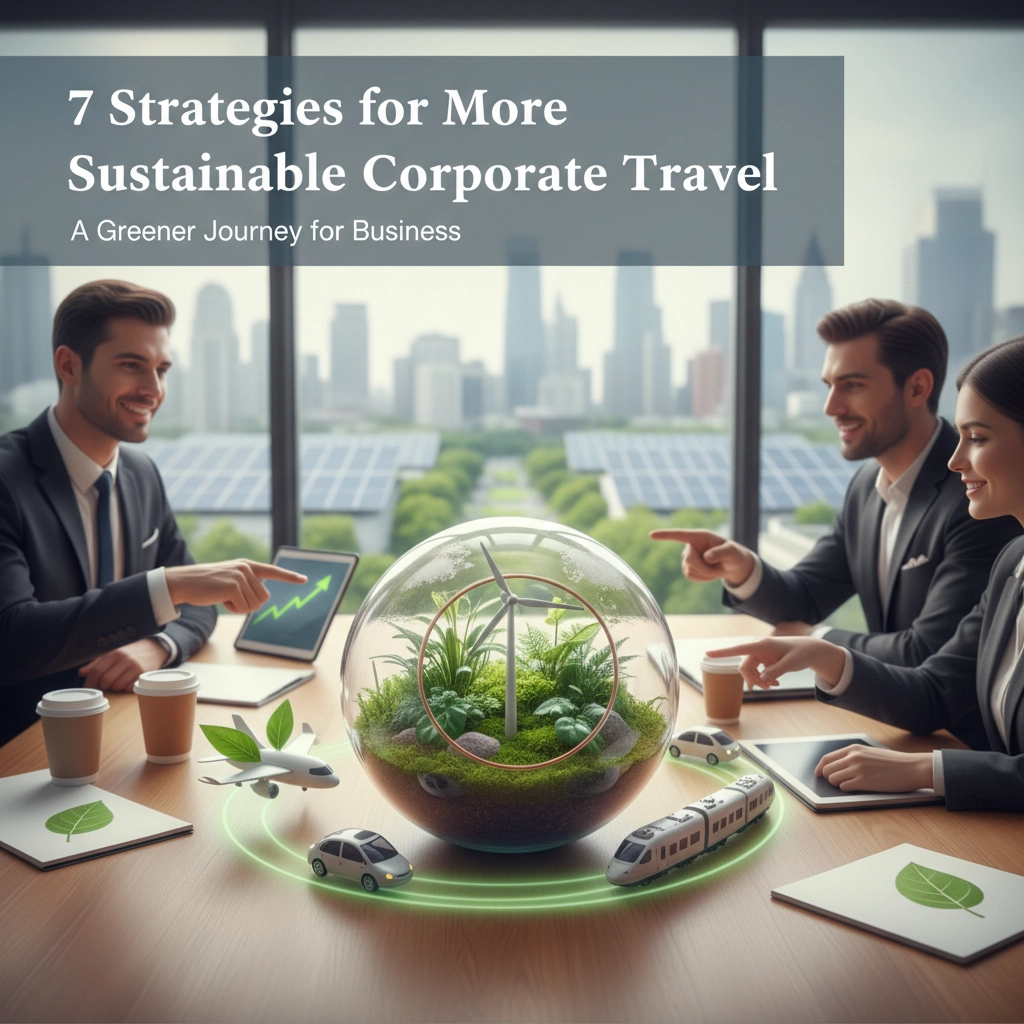
Your corporate travel program represents one of your organization's most significant opportunities to reduce environmental impact while maintaining business effectiveness. Smart sustainability strategies don't just benefit the planet: they often reduce costs and improve employee satisfaction too.
The shift toward sustainable business travel has accelerated dramatically, with companies improving their sustainability scores from 1.8 in 2024 to 2.2 in 2025. These improvements stem from implementing comprehensive strategies that address every aspect of corporate travel, from flight selection to hotel partnerships.

Strategy 1: Build a Comprehensive Sustainable Travel Policy
Your sustainable travel policy forms the foundation of every environmental improvement you'll achieve. This document should establish clear guidelines for transportation choices, accommodation standards, and carbon reduction targets that align with your company's broader sustainability goals.
Create specific criteria for flight selection, prioritizing direct routes and airlines with proven sustainability commitments. Include measurable benchmarks such as carbon emission targets per trip or percentage reductions year-over-year. Your policy should also outline preferred ground transportation options and accommodation standards that support environmental responsibility.
The most effective policies integrate sustainability considerations into the booking process itself, making eco-friendly choices the default rather than an afterthought. This approach ensures consistent implementation across all departments and travel scenarios.
Strategy 2: Prioritize Direct Flights and Sustainable Aviation Partnerships
Your flight selection decisions create the most significant environmental impact in corporate travel. Direct flights reduce carbon emissions substantially because takeoffs and landings consume the most fuel during any journey.
Train your travel coordinators to identify direct flight options first, even when they carry slightly higher costs. The emission savings often justify the price difference, especially when you factor in reduced travel time and improved productivity.
Partner with airlines that demonstrate genuine sustainability commitments through fleet modernization, sustainable aviation fuel (SAF) adoption, and operational efficiency improvements. Some airlines now offer SAF certificates, allowing your company to invest in cleaner fuel alternatives that reduce the carbon intensity of business flights.

Strategy 3: Optimize Ground Transportation Choices
Your ground transportation decisions extend your sustainability impact beyond the airport. Train travel has become increasingly accessible through technology integrations, offering low-emission alternatives for regional business trips.
When rail options aren't available, prioritize ride-sharing services with electric vehicle fleets. Companies like Uber now operate EV-only options in over 40 cities globally, making clean ground transportation more accessible than ever.
For shorter distances, encourage walking or cycling when safe and practical. Many cities now offer bike-sharing programs specifically designed for business travelers, providing convenient access to zero-emission transportation.
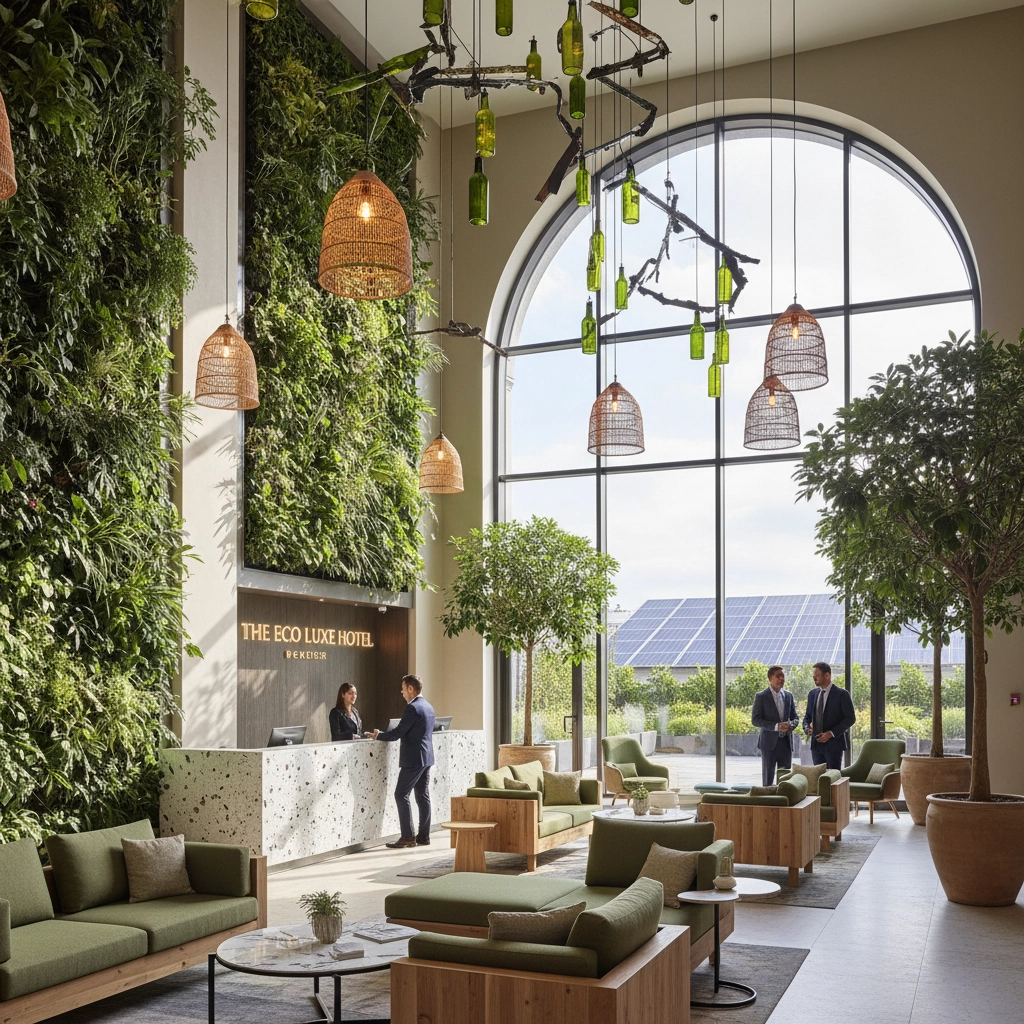
Strategy 4: Select Hotels with Verified Sustainability Programs
Your accommodation choices directly influence your travel program's environmental footprint. Partner with hotels that demonstrate measurable sustainability commitments through renewable energy sourcing, water conservation systems, and waste reduction initiatives.
Evaluate potential hotel partners based on their sustainability certifications, energy efficiency ratings, and community environmental programs. Hotels with formal sustainability policies and trackable goals typically deliver better environmental outcomes than those making general sustainability claims.
Look for properties that use sustainable cleaning products, implement comprehensive recycling programs, and source food locally when possible. These operational choices indicate genuine environmental commitment rather than superficial marketing efforts.

Strategy 5: Implement Strategic Travel Reduction
Your most sustainable trip is often the one you don't take. Evaluate each travel request against clear business objectives, leveraging virtual meeting technology for routine check-ins, training sessions, and preliminary discussions.
Reserve in-person travel for scenarios that genuinely require physical presence: complex negotiations, relationship building, hands-on training, or site inspections. This strategic approach maintains business effectiveness while significantly reducing unnecessary emissions.
Create decision frameworks that help employees and managers evaluate when travel adds genuine value versus when virtual alternatives can achieve the same objectives. Clear criteria eliminate guesswork and ensure consistent application across your organization.
Strategy 6: Establish Carbon Tracking and Management Systems
Your sustainability progress depends on accurate measurement and transparent reporting. Implement systems that capture detailed emissions data from all travel components: flights, ground transportation, and accommodations.
Work with your sustainability team to establish carbon budgets for different departments or trip types. Companies implementing carbon budget systems have shown measurable improvement, with scoring increases from 0.5 in 2024 to 0.7 in 2025.
Use this data to identify your highest-impact opportunities for emission reduction. Regular reporting helps maintain accountability and demonstrates progress toward your sustainability goals to stakeholders and employees alike.
Strategy 7: Educate Employees and Provide Booking Guidance
Your employees make the daily decisions that determine your program's environmental success. Provide clear guidance on sustainable choices during the booking process, highlighting lower-emission options and their environmental benefits.
Train travelers on simple actions that reduce environmental impact: packing light to decrease aircraft fuel consumption, bringing reusable water bottles, supporting local restaurants, and avoiding single-use plastics.
Integrate sustainability insights directly into your booking platform, showing carbon emissions alongside price and schedule information. This transparency empowers employees to make informed decisions that align with your sustainability objectives.
Consider offering carbon offset options or sustainable aviation fuel contributions as part of your booking process. These programs help employees take personal responsibility for their travel impact while supporting broader environmental initiatives.
Maximizing Your Sustainable Travel Success
Your sustainable travel program succeeds through consistent implementation and continuous improvement. Partner with experienced travel management companies that specialize in sustainability solutions to streamline policy development and supplier evaluation.
Regular program assessment helps identify new opportunities for environmental improvement as technology and industry practices evolve. The sustainable travel landscape changes rapidly, with new options for clean transportation and carbon reduction emerging regularly.
Your commitment to sustainable corporate travel demonstrates environmental leadership while often reducing costs and improving traveler satisfaction. These strategies create lasting value for your organization, your employees, and the communities you visit.
Ready to transform your corporate travel program with sustainable solutions? Contact USA Entertainment Travel today at +1 970-709-0037 or info@usaev.com to discuss how we can help you implement these strategies effectively.