
Your corporate travel management strategy determines whether business trips drain resources or fuel growth. Most CEOs watch travel expenses spiral while productivity plummets: but that's exactly where transformation opportunities lie hidden. You can convert chaotic travel operations into competitive advantages that drive revenue, reduce costs, and strengthen employee satisfaction.
The difference between companies that struggle with travel chaos and those that leverage travel strategically comes down to systematic implementation. You need a framework that addresses root causes while positioning travel as an investment rather than an expense. Here's your roadmap to strategic travel transformation.
Step 1: Centralize Your Travel Data and Policies
The foundation of effective corporate travel management starts with consolidation. Your current approach likely involves fragmented approvals across departments, manual reimbursement processes, and budget visibility that ends at spreadsheet limitations. This fragmentation creates information gaps that cost you both money and strategic insight.
Centralize all travel policies and spending data in one integrated system. This creates a single source of truth that gives you instant visibility into where company money flows and how effectively each dollar works toward business objectives. When you can see travel patterns across your entire organization, you identify optimization opportunities that remained invisible under fragmented systems.

Enforce standardized travel policies that align with your budgetary constraints and operational needs. Your employees need clear guidelines that remove guesswork from booking decisions while ensuring compliance with company standards. The result is predictable travel expenses with better adherence to approved spending limits across all departments.
Your centralized approach should include approval workflows that match your organizational structure. When department heads can review and approve travel requests within the system, you maintain control while eliminating bottlenecks that delay critical business trips.
Step 2: Implement Digital Intelligence and Automation
Move beyond basic booking tools to AI-powered platforms that consolidate booking, expense tracking, and reporting in one comprehensive system. These intelligent platforms transform raw travel data into actionable insights about employee behavior, spending patterns, and regional cost variations that impact your bottom line.
Digital automation handles routine tasks like reimbursements, approvals, and policy compliance checks. Your finance team gains time for strategic analysis rather than administrative overhead. Mobile-first design empowers traveling employees with instant access to bookings, approvals, and expense reporting from their devices, enabling faster responses and better compliance with company policies.
Real-time expense monitoring gives finance departments unprecedented transparency into travel spending as it happens. You can identify budget overruns before they become problems and adjust policies or negotiate better rates based on actual usage patterns rather than estimates.

Your automated system should integrate with existing financial software to eliminate double data entry and ensure consistency across all business processes. When travel data flows seamlessly into your broader financial picture, you gain clearer insights into how travel investments support overall business performance.
Step 3: Use Data to Make Informed Strategic Decisions
Leadership agility depends on information quality and accessibility. When you have detailed reporting and analytics on travel spending patterns, you can optimize resource allocation toward business growth rather than reactive expense management. Data-driven decisions replace guesswork with strategic precision.
Your analytics should reveal which travel investments generate the highest returns. If certain regions consistently exceed budgets, you can negotiate better deals, optimize routes, or adjust policies based on actual performance data rather than assumptions. This approach transforms travel from a cost center into a source of competitive intelligence.
Connect travel and expense management to broader business goals by measuring travel's return on investment in terms of both profit and operational performance. When you can demonstrate how strategic travel supports revenue generation, client relationships, and market expansion, you position travel as a business driver rather than a necessary expense.
Track key performance indicators that matter to your business objectives. Monitor cost per trip, average savings per booking, policy compliance rates, and employee satisfaction scores. These metrics help you identify areas for improvement while demonstrating the value of your corporate travel management program to stakeholders.

Your data analysis should extend beyond cost tracking to include productivity metrics. Measure how travel efficiency impacts project timelines, client satisfaction, and employee performance. This broader perspective helps you optimize travel schedules and policies to support business outcomes rather than just controlling expenses.
Step 4: Align Travel Strategy With Organizational Goals
Travel managers must become experts in both travel logistics and your business strategy. This means ensuring that your travel program directly supports your company's core objectives: whether that's entering new markets, building partnerships, or maintaining competitive advantages in your industry.
Tailor your travel management approach to different leadership priorities throughout your organization. Address CFO concerns about cost control, COO concerns about operational efficiency, and your own focus on competitive positioning. When travel strategy aligns with these diverse priorities, it stops being viewed as overhead and becomes recognized as a strategic tool.
Your travel policies should reflect your company's values and market position. If innovation drives your competitive advantage, your travel program should support rapid movement to emerging opportunities. If cost leadership defines your market strategy, your travel policies should emphasize efficiency and value optimization.
Consider how travel supports long-term business development. Strategic travel investments in relationship building, market research, and partnership development often generate returns that extend far beyond individual trip costs. Build these considerations into your travel approval and planning processes.

Regular review of travel strategy alignment ensures your program evolves with changing business needs. Quarterly assessments help you identify when travel patterns should shift to support new strategic initiatives or market opportunities.
Step 5: Prioritize Employee Experience and Work-Life Balance
The most overlooked element of travel transformation is cultural impact. When your travel platform is intuitive, transparent, and mobile-friendly, it boosts morale by reducing friction and encouraging accountability. Employees who have seamless travel experiences are more engaged, productive, and loyal to your organization.
Your corporate travel management system should eliminate common frustrations that damage employee satisfaction. Complicated booking processes, unclear reimbursement procedures, and limited travel options create stress that impacts performance both during and after business trips.
Consider how travel policies impact work-life balance. Flexible scheduling options, reduced travel time through better route optimization, and clear guidelines about after-hours travel expectations help executives and employees maintain equilibrium between professional and personal responsibilities.
Build employee feedback mechanisms into your travel program evaluation process. Regular surveys and feedback sessions help you identify pain points and optimization opportunities that might not appear in financial reports but significantly impact employee satisfaction and retention.

Your travel program should demonstrate that the company values employee wellbeing. This cultural message has ripple effects across engagement, retention, and overall organizational performance. When employees see that travel policies prioritize their comfort and efficiency, they approach business travel with positive attitudes that enhance business outcomes.
Transform Your Travel Operations Today
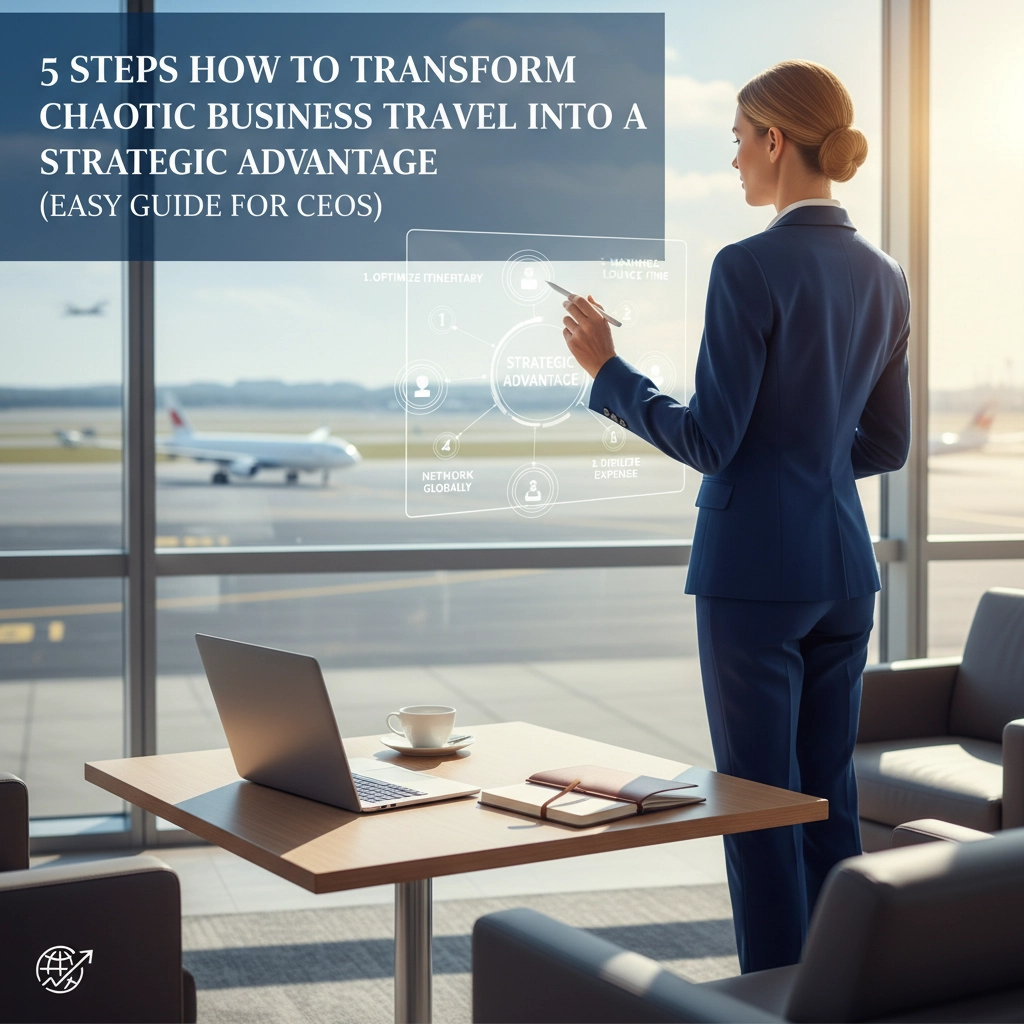
Transforming chaotic business travel into strategic advantage requires systematic implementation of centralized systems, intelligent automation, data-driven decisions, strategic alignment, and employee-focused design. Leaders who embrace this comprehensive transformation redefine how travel contributes to company success while strengthening their competitive position in an increasingly global business landscape.
Your next step is assessing your current travel management maturity and identifying which of these five areas offers the greatest immediate improvement opportunity. Start with the area that addresses your most pressing travel challenge, then expand your transformation systematically across all five strategic elements.
Ready to transform your corporate travel management strategy? Contact USA Entertainment Travel today to discover how our comprehensive solutions can turn your travel chaos into competitive advantage.
Contact us: Phone +1 970-709-0037 | Email info@usaev.com