
Your corporate travel budget is bleeding money, and traditional cost-cutting measures aren't delivering the results your board expects. While you've negotiated better rates and tightened approval processes, you're still watching travel expenses spiral beyond acceptable limits. That's where AI analytics transforms everything.
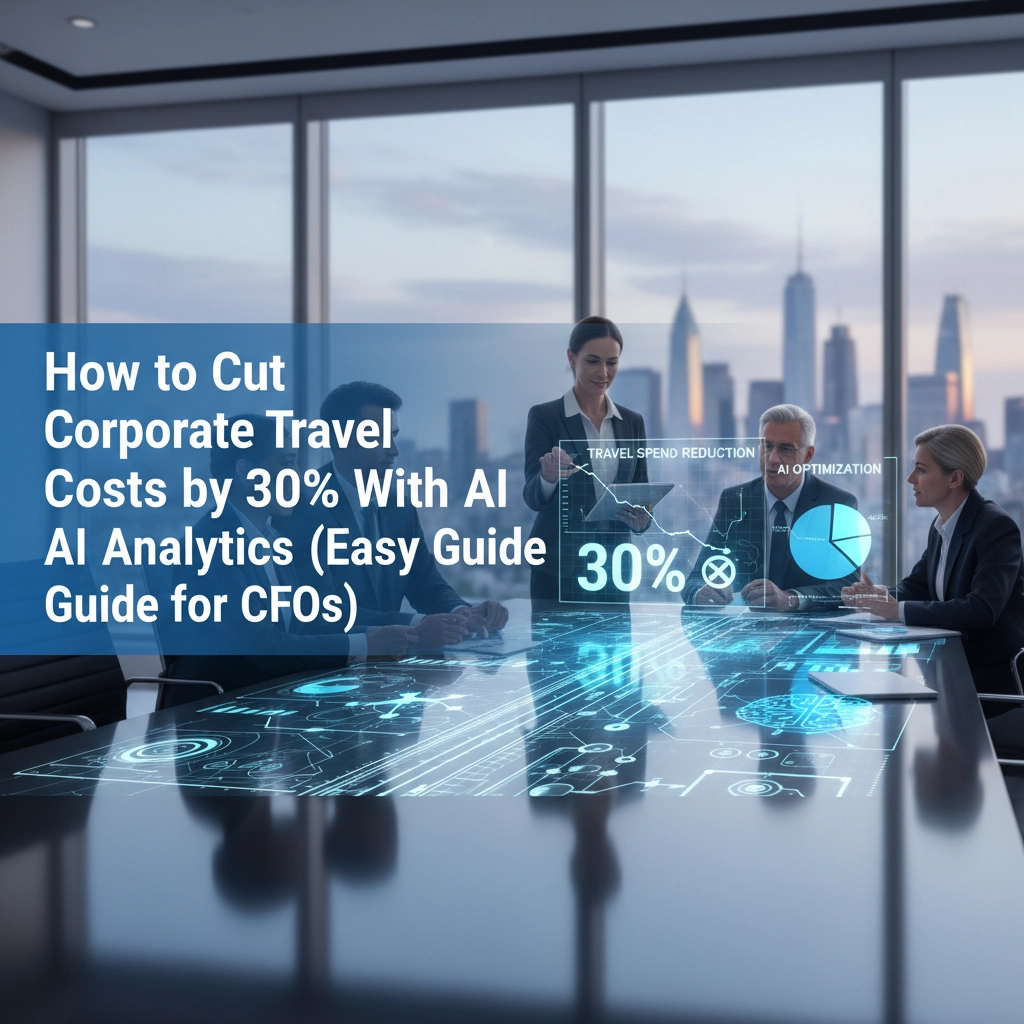
Smart CFOs are leveraging artificial intelligence to slash travel costs by 30% or more without restricting business growth. Companies implementing AI-powered travel management report average savings of $4.2 million annually, with some achieving 78% reductions in processing costs and 23% decreases in ticket prices. Your organization can achieve similar results by deploying the right AI strategies systematically.
Transform Your Booking Strategy with Predictive Pricing Intelligence
Your current booking approach costs you thousands in missed opportunities every month. AI-powered predictive analytics revolutionizes how you time travel purchases by analyzing historical price patterns, market conditions, and demand forecasts to identify optimal booking windows.
Deploy dynamic pricing algorithms that monitor fare fluctuations across your most-traveled routes. These systems predict price movements up to 90 days in advance, alerting your travel team when fares are about to spike or when the best deals become available. You'll eliminate the guesswork from procurement decisions and secure lower rates proactively instead of reactively.

Set up automated price monitoring for your top 20 travel routes and establish booking triggers when prices hit predetermined thresholds. Configure alerts for your travel managers that include specific recommendations: "Book now" when prices are predicted to rise, or "Wait 3 days" when further drops are expected. This systematic approach has helped organizations achieve ticket price reductions of up to 23%.
Shift your organizational culture toward advance planning by using AI forecasts to justify earlier booking decisions. When your predictive system shows that prices for a key business route will increase by 40% next month, you can book strategically and present concrete savings data to stakeholders who question early commitments.
Automate Expense Management to Eliminate Cost Leakage
Your manual expense processes are draining both time and money while creating opportunities for policy violations and fraud. AI-powered expense automation delivers immediate cost reductions through improved efficiency and compliance enforcement.
Implement intelligent receipt processing that uses computer vision to extract data automatically from receipts, eliminating manual entry errors and reducing processing time by 67%. Your finance team stops spending hours categorizing expenses manually, freeing them for strategic analysis that drives better business decisions.
Configure real-time policy enforcement within your booking systems to prevent out-of-policy purchases before they occur. Hard-code your travel policies into AI booking platforms so unauthorized premium cabin selections, expensive hotel choices, and non-approved vendors are blocked at the point of purchase. You'll prevent budget overruns instead of discovering them after reimbursement.
Deploy fraud detection algorithms that learn your organization's normal spending patterns and flag suspicious expense claims automatically. These systems identify duplicate receipts, inflated amounts, and unusual spending behaviors that human reviewers might miss, protecting your budget from manipulation.

The combined impact of automated expense management delivers processing cost reductions up to 78% while improving policy compliance by 25%. You'll see immediate improvements in both operational efficiency and budget control.
Optimize Vendor Relationships Through Data-Driven Intelligence
Your vendor selection process lacks the analytical depth needed to maximize savings opportunities. AI analytics reveals hidden patterns in your travel spending that unlock better rates and identify underperforming suppliers.
Analyze your complete vendor performance data to identify airlines, hotel chains, and rental car companies delivering the best value-to-service ratios. Use this intelligence to negotiate volume discounts based on consolidated spending patterns and redirect bookings toward your highest-performing partners.
Evaluate alternative routing options for frequently traveled lanes using AI optimization engines. These systems calculate when multi-leg flights with layovers offer significant savings over direct routes without excessive time penalties. You'll discover cost-effective alternatives your travelers and booking agents never considered.
Leverage traveler profile data to surface personalized recommendations that reduce costs while maintaining satisfaction. When an employee has elite status with a specific hotel chain, AI systems factor in potential upgrades, late checkout privileges, and loyalty rewards that effectively reduce net accommodation costs.
Deploy Virtual Assistants to Reduce Administrative Overhead
Your travel support infrastructure consumes valuable resources managing routine inquiries and booking changes. AI-powered virtual assistants handle these tasks 24/7 without human intervention, reducing administrative costs while improving traveler satisfaction.
Implement chatbot systems that manage itinerary changes, rebooking during disruptions, travel policy clarifications, and expense report submissions. These virtual assistants resolve 80% of routine travel inquiries instantly, eliminating the need for dedicated staff to handle basic support functions.
Configure automated rebooking capabilities that respond to flight cancellations and delays by immediately searching for alternatives within policy parameters. Your travelers receive new itineraries within minutes of disruptions, avoiding the costs and complications of manual rebooking processes.

Set up proactive travel alerts that notify employees of delays, gate changes, and weather disruptions before they impact travel plans. This early warning system reduces missed connections, hotel no-shows, and other costly travel complications that drain your budget unnecessarily.
Establish Performance Metrics That Drive Continuous Improvement
Your cost reduction efforts need measurable benchmarks to track progress and identify additional optimization opportunities. Implement these key performance indicators to monitor your AI analytics implementation:
Track your cost per mile traveled by calculating total travel spend divided by aggregate miles to identify efficiency trends over time. Monitor booking accuracy rates to ensure your AI systems maintain high compliance with policy and budget parameters. Measure expense processing cycle time reduction from submission to reimbursement completion.
Calculate your savings capture rate by comparing realized savings from AI recommendations against potential spend without intelligent systems. Document policy compliance improvements as a percentage of travel expenses that align perfectly with corporate guidelines.
Establish baseline measurements before AI implementation and review progress monthly to identify areas requiring adjustment. Your analytics should demonstrate clear progression toward your 30% cost reduction target while maintaining or improving traveler satisfaction scores.
Implementation Timeline for Maximum Impact
Begin your AI analytics deployment with predictive pricing systems for your highest-volume travel routes. Implement automated expense management in month two, focusing on receipt processing and policy enforcement. Deploy vendor optimization analytics in month three to renegotiate contracts based on data insights.
Roll out virtual assistant capabilities in month four to reduce administrative overhead, followed by comprehensive performance monitoring in month five. This phased approach allows your organization to adapt to changes gradually while building confidence in AI-driven travel management.
The compounding effects of these strategies accelerate over time as AI systems learn your organizational patterns and preferences. Companies report that savings increase beyond initial targets as their systems mature, making your 30% cost reduction goal a realistic starting point rather than a ceiling.
Your path to significant travel cost reduction starts with selecting the right AI analytics platform and committing to systematic implementation. The organizations achieving the greatest savings combine multiple AI strategies simultaneously while maintaining focus on measurable outcomes and continuous improvement.
Ready to transform your corporate travel costs with AI analytics? Contact our expert team to discuss your specific optimization opportunities.
Phone: +1 970-709-0037
Email: info@usaev.com